CNewhouse
-
Posts
63 -
Joined
-
Last visited
CNewhouse's Achievements

Member (3/5)
9
Reputation
-
https://www.hvacquick.com/products/residential/Bathroom-Ventilation/Discharge-Caps/Seiho-SFX-Series-Aluminum-Louvered-Vent-Caps-With-Hoods?gad_source=1&gad_campaignid=19098719225&gbraid=0AAAAAD_v8vP1Pyw2OW4s8t6adaMxD4UVY&gclid=CjwKCAiAkbbMBhB2EiwANbxtbQV3WjiYwl0U91VblvVd8CP6eUL5UHIIRUTnqfrYxJ41CxBbSSSQqhoC68wQAvD_BwE I've seen those a few times. Typically for an exhaust fan.
-
That commentary is unbelievably bad. I've been doing this for 8 years now. I suppose I shouldn't be, but I'm still surprised by the number of inspectors that communicate poorly, spell words incorrectly, fail to convey issues and their implications clearly, fail to even understand issues and their implications, and yet still get work. I've seen sample reports from inspectors in my area, that they themselves posted as an indication of the quality of their work, that contain upside down photos, random numbers in narratives, omitted words that someone clearly forgot to select from a drop-down menu, redundant narratives attempting to describe the same issue multiple times... and you know these companies are the go-to for certain realtors.
-
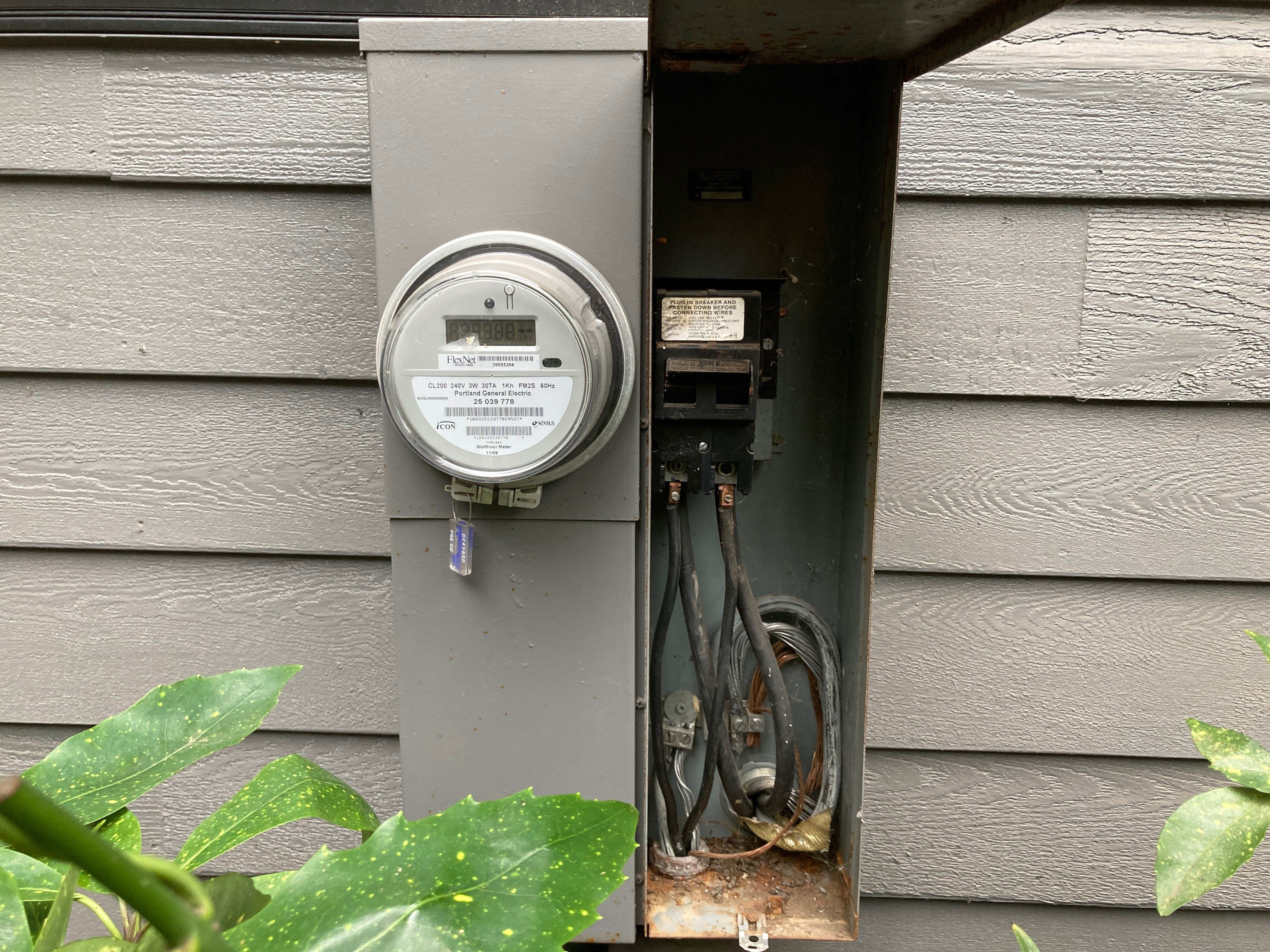
Thanks, Bill. That's what I'm seeing as well. Seems to me that electricians are raising the alarm as it generates business. And inspectors are writing their reports defensively. But there's no verifiable info to warrant all of the "replace immediately" that I'm seeing online. Challenger panels are being grouped with Federal Pacific and Zinsco, but there's no explanation as to why.
-
Does anyone have info on the more recent Challenger panel recall? I know that the 1988 recall was specific to GFCI breakers. However, I can find little info on the more recent recall that happened either in 2011 or 2014. I can't find definitive answers regarding when the recall actually took place, what the issue was, or how many/which panels were deemed concerning.
-
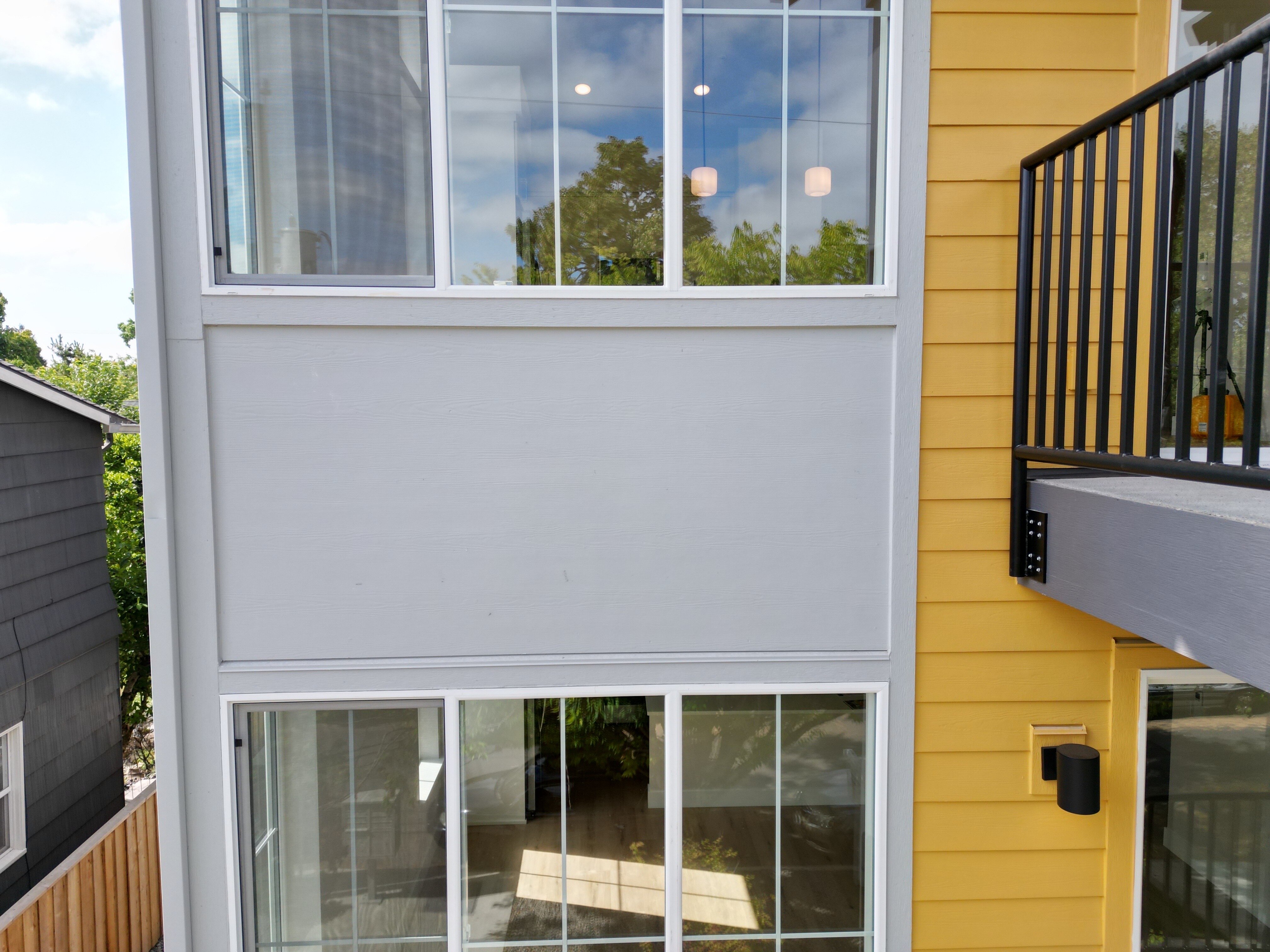
When inspecting Hardie panel siding on new builds, I see it spanning floor systems about half of the time. Maybe more. Hardie's installation details require a horizontal seam in the siding at each floor system. I call it out when I see it done incorrectly, and the builders always respond as expected. "I've been doing it this way for years and I've never had a problem!" I'm curious. Have any of you even seen damage to Hardie panels because of the missing horizontal seam at a floor system?

-
That makes sense. Thanks, Jim.
-
Thank Marc. And yes, that is the portion that I do understand. There is also the concern of bonded systems/materials becoming energized, if I understand correctly. I am confused as to why it was once allowed in detached buildings though. I assume having a dedicated grounding electrode is the difference? And that a large gauge GEC will clear faults via that electrode and prevent issues?
-
The subpanel at today's inspection was in the same building as the service panel. The subpanel had a 3 wire feed and bonded neutrals. This has never been allowed, correct? If I'm understanding this correctly, this could only be done pre-2008 when the subpanel was in a detached building and had its own grounding electrode? What is the concern, functionally? Would there be an issue clearing faults? I understand the implications of bonding neutrals downstream of the service equipment in general, but get fuzzy as to why it was accepted in detached structures under certain circumstances (but not in the same structure).
-
I would say there undoubtedly are. A category I furnace with a B vent sloped at 1/8" per foot is wrong. A category I furnace with a PVC exhaust vent is very wrong and dangerous. Silly example, yes, but there is absolutely a spectrum of concern when it comes to defects in the various systems. To assign every issue equal significance would be a disservice to the client. Many know little about homes and how they work.
-
I was wondering about the copper and aluminum. Thanks fellas.
-
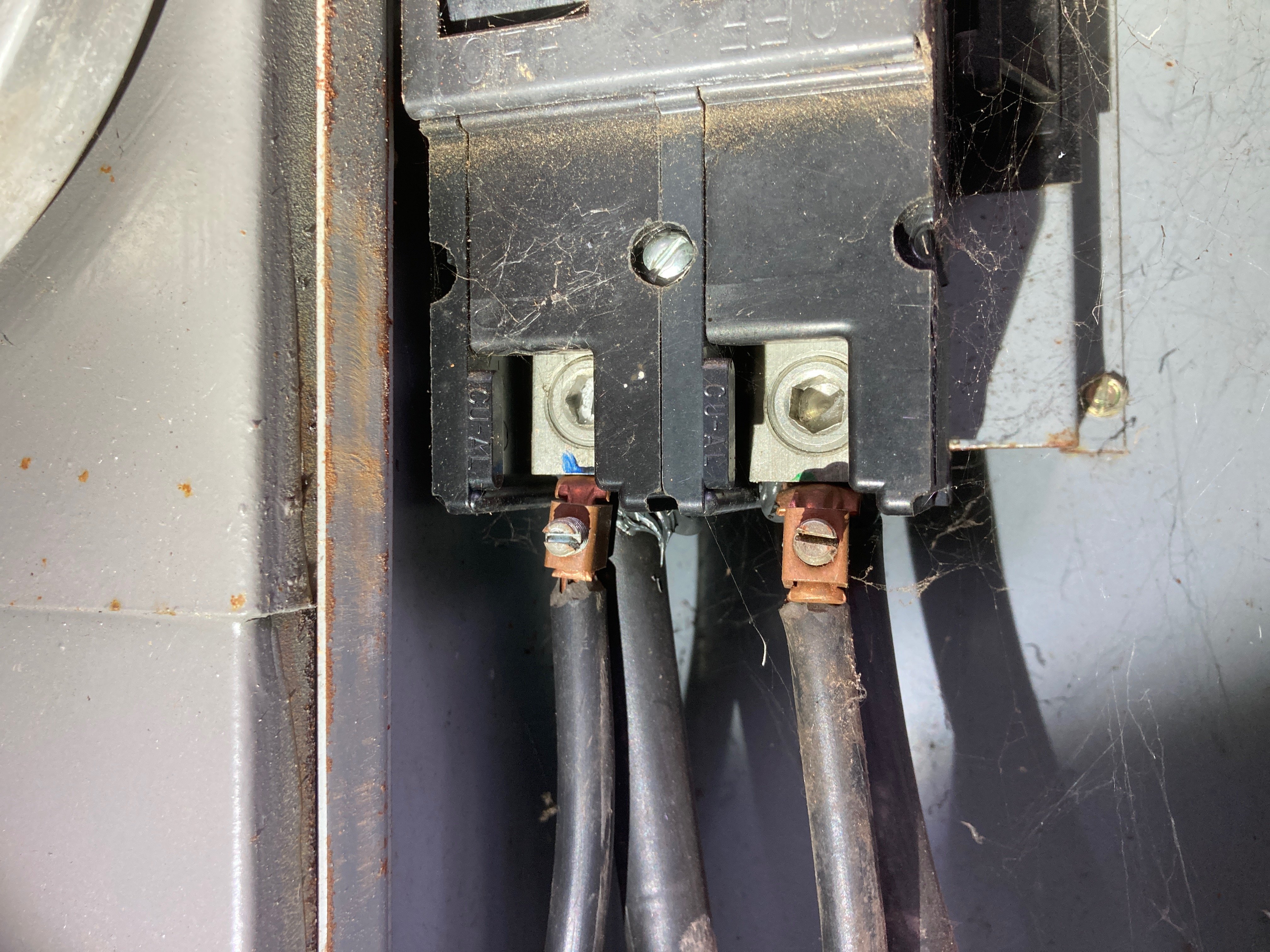
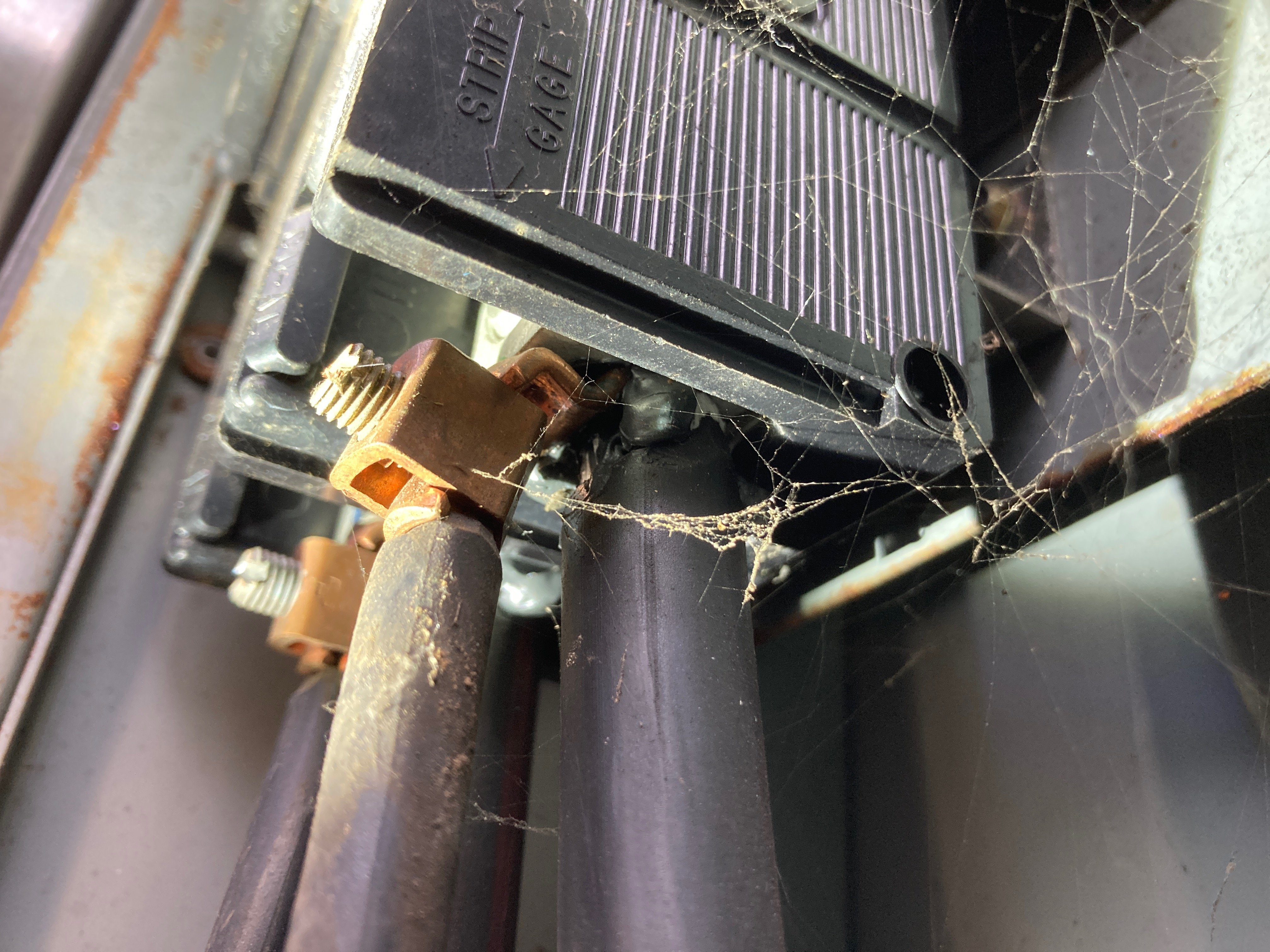
Wondering if the connector would prevent the lug from securing the 4/0 aluminum conductors properly.
-
Would this be considered a double tap? I don't think I've ever seen this done.
-
My advice would be to study with the intention of learning knowledge that will make you a good home inspector. I passed the NHIE on my first attempt. I did not find it particularly difficult. But passing the exam is a small task in comparison to acquiring the knowledge necessary to perform a competent home inspection. I'd suggest getting a copy of Code Check and becoming familiar with the Oregon Residential Specialty Code, as well as the other codes currently enforced. Learn how to reference these and find pertinent information (particularly helpful in new/newer construction). Though we don't perform code inspections, many of the best practices and safety standards we reference come directly from the code. And some of those standards will likely be in questions within in the NHIE. I think the Carson Dunlop books on the various systems of the home are also great for education. I purchased many of them through eBay for a reasonable price.
-
I rarely see humidifiers added to heating systems. Basement dehumidifiers are much more common in my area. Usually plenty of moisture in these parts.
-
I like the idea of the humidistat. That would be helpful in conveying to buyers and agents that the issue is not a roof leak but ambient moisture.