CNewhouse
-
Posts
63 -
Joined
-
Last visited
Content Type
Profiles
Forums
Articles
News for Home Inspectors
Blogs
Gallery
Store
Downloads
Everything posted by CNewhouse
-
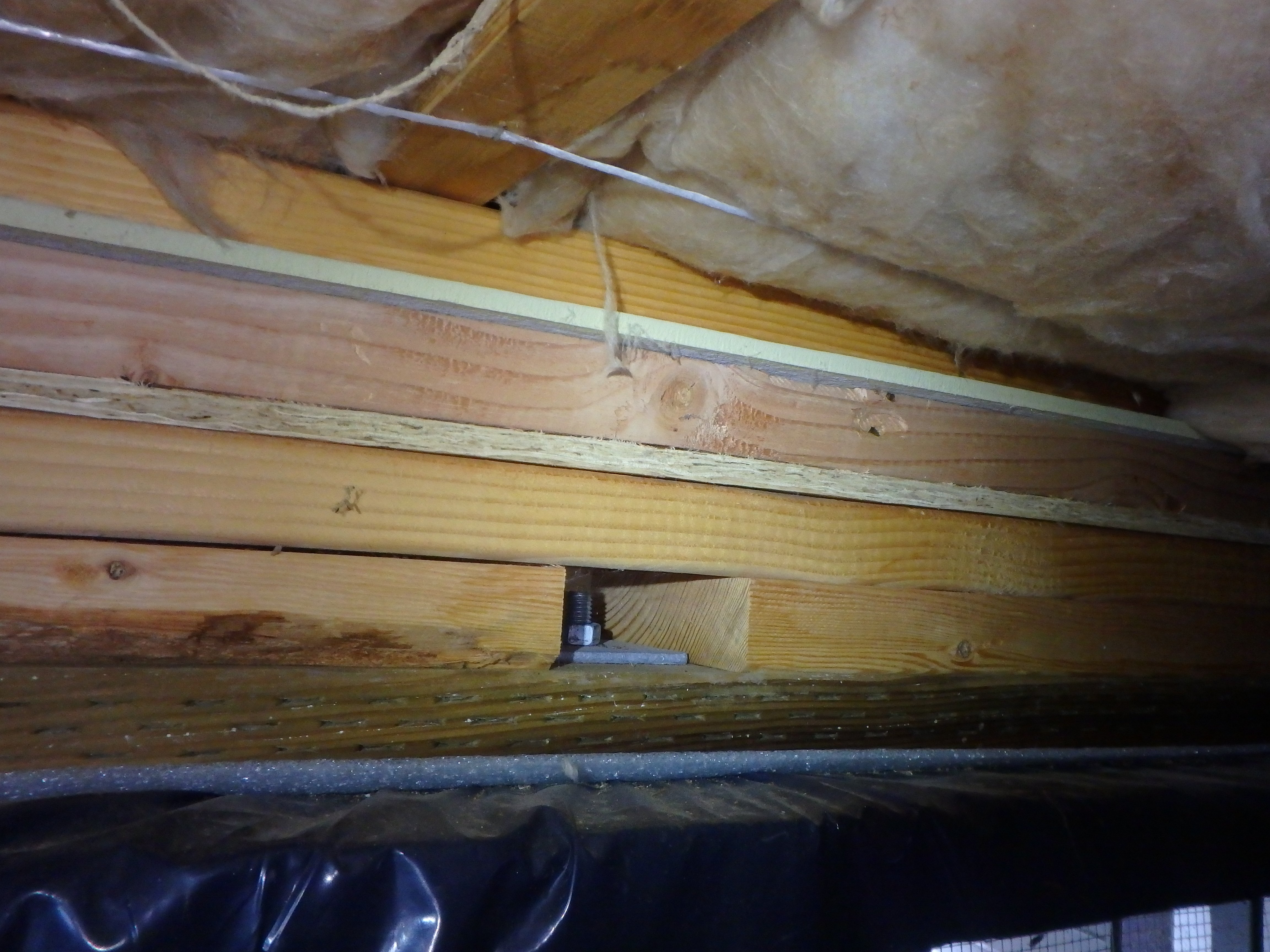
Yes. That was another one of my concerns. The anchor bolts only secure the lowest PT sill plate to the foundation. Even with shear panels on the exterior wall, I would think that the strength of the connection between the foundation and framing has been compromised.
-
That's basically what I said, in addition to including a comment from Hardie, "You cannot use our products as shims. Our products are not designed, tested or warranted for this type of application". The part I was a bit hung up on was what recommendation to make to the buyer. This is wrong, here is why, and... what? Ask the builder for documentation that this is an appropriate use of Hardie? They won't have that. Consult an engineer? They won't do that. I try not to kick the can down the road, but I wasn't sure how to avoid it here.
-
I inspected a new home today. On top of the pressure treated 2x6 sill plate there were 4 additional 2x6 plates (presumably to get the sill plate up to the height of the floor system). Between 2 of these additional 2x6 plates, there was a continuous run of Hardie plank siding, used as a shim/spacer. This was a 2 story home with composite roofing (a substantial load was being transferred through the Hardie). I'm curious what others think of the fiber cement siding installed here and how they'd comment in their report. Additionally, any ideas why the builder would pour the foundation low and build up the sill to meet the floor joists?

-
Understood. Thanks Mike.
-
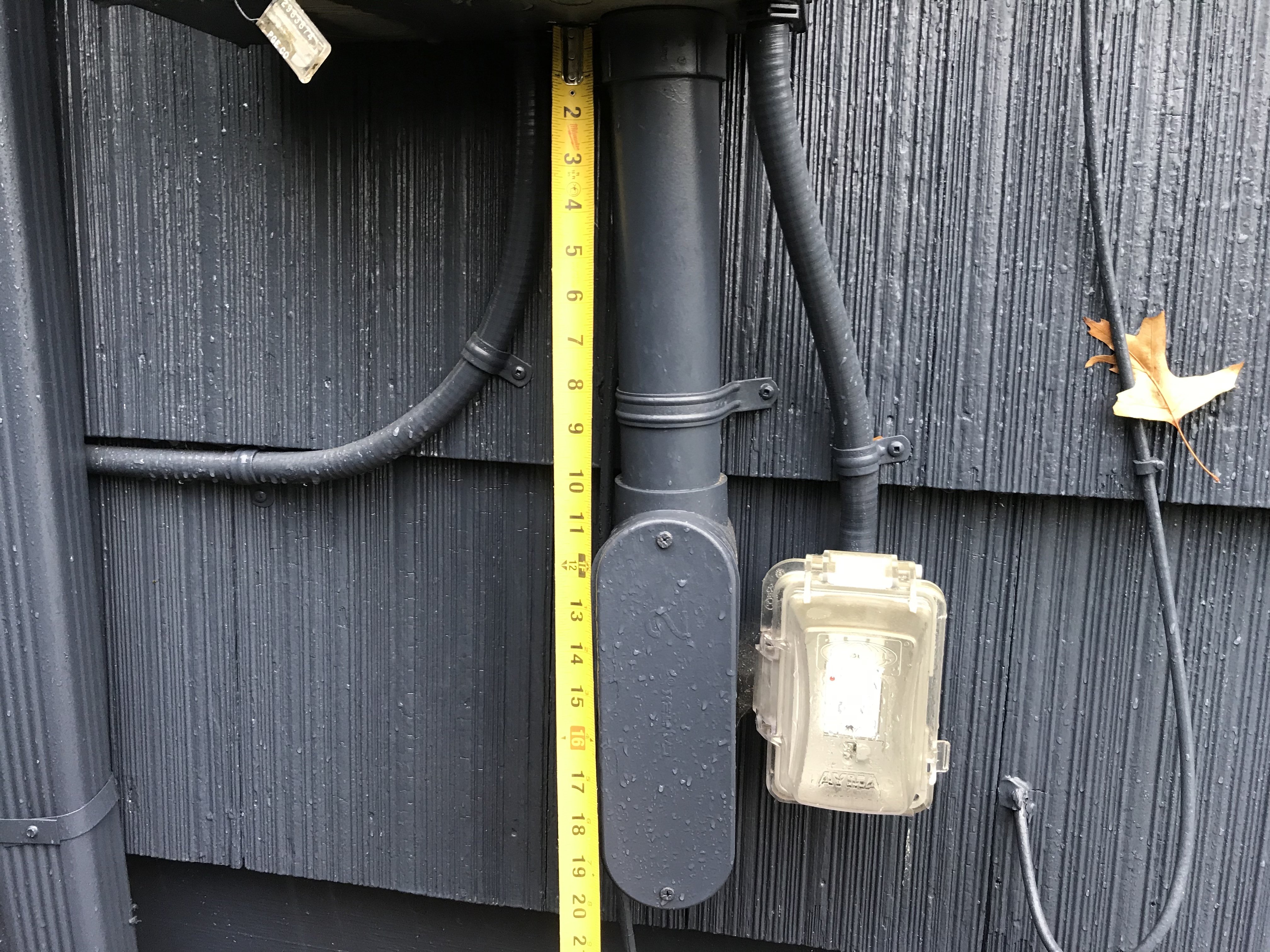
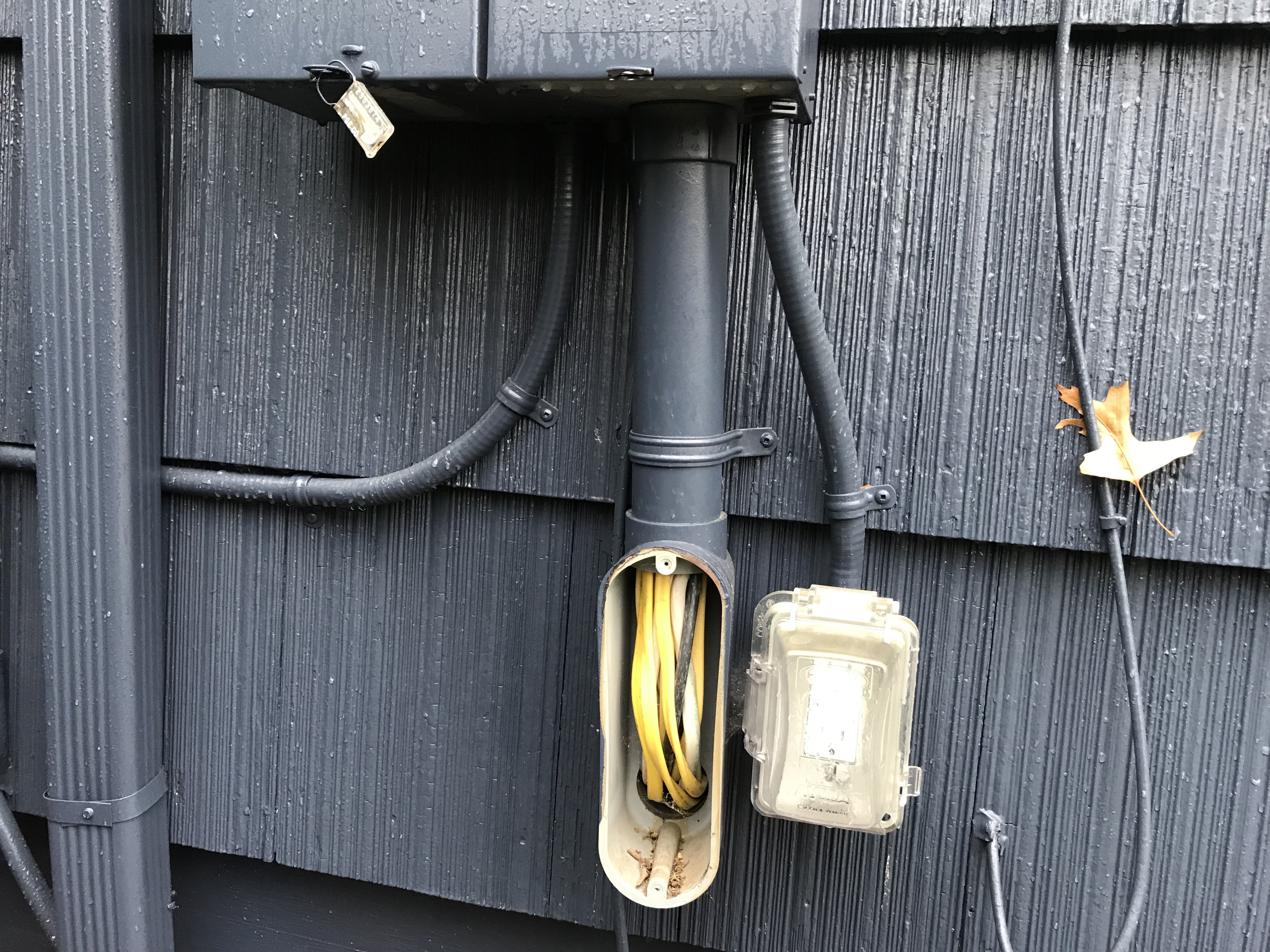
Yes, there is an LB conduit body below the panel. I actually emailed Cantex asking if the conduit body is rated for exterior installation (I know some are not). Here is the response, which doesn't actually answer the question: "This is pretty much a standard installation for the conduit bodies. With the gasket, between the body itself & the lid, if properly secured, it should remain watertight under normal rain conditions and/or sprinkler action." Is this something you would comment on as a defect, Mike? The gasket was a bit degraded, but the interior of the conduit body was dry despite recent rainfall.
-
Yes. It connects at the bottom right of the panel.
-
That is what I was thinking as well.
-
Evening, I am correct in my understanding that typical conduit fill and derating guidelines don't apply to a short PVC nipple below the service panel? The PVC was installed to protect the NM home runs as they penetrate the exterior wall, is probably near 24" long, and is obviously open at the crawlspace end (not running between 2 boxes). Any reason for concern here? I'm having difficulty locating a reference to this specific situation.
-
Sound of water trickling inside radon vent pipe
CNewhouse replied to Mike Lamb's topic in Environmental Hazards
Was it raining during your inspection? I'm wondering if maybe water was entering the radon vent termination at the exterior and following the PVC pipe into the crawl, then leaking out the perforated pipe? -
I bought a Fenix PD35 in 2016 and have loved it since. I bought 2 extra batteries and keep them in my tool bag. 1000 lumen, several brightness settings, lightweight, tough and reasonably priced. This conversation prompted me to invest in the UC35 which has micro USB charging and a charge level indicator on the control button. Pretty cool.The E30R looks very nice, but I prefer to have a holster for my torch; less likely to fall from my hip into 18" of blown in fiberglass.
-
New with a few business financial questions!
CNewhouse replied to stevenj's topic in Bare Bones Biz Money Making Q & A
I would plan on spending a significant amount of time on your reports early on. Jim has a wealth of experience and his reports will undoubtedly be faster than yours as a newer inspector. If you are going to use any of the popular reporting programs, it takes time to organize photos and even longer to caption them if you go that route. It is also quite an investment to create and organize narratives and develop your template. Additionally, when you run into installations and materials that you are unfamiliar with, time will be spent researching those. I often find myself on tangents when reading installation manuals and looking into code requirements. If you want to be thorough, you cannot be fast. That's my opinion.