

hausdok
-
Posts
13,641 -
Joined
-
Last visited
Content Type
Profiles
Forums
Articles
News for Home Inspectors
Blogs
Gallery
Store
Downloads
Everything posted by hausdok
-
Hi Kurt, So, you looked at a 60 year old test bed that hasn't killed anyone. Hmmm. I'm not advocating it, and I know there's probably a prohibition against it somewhere; however, I bet from an engineering standpoint it's not that difficult an issue to lick. For instance, if the house had an actuator activated makeup air damper for the whole house air change system - and many do - that could be set to activate simultaneously with any dampers between the garage and the house, thus allowing fresh outside air into the system without taking air from the garage, the house and the garage would both be under positive pressure, but the garage, being leakier than the interior as so many are, would allow fumes to leak out under/around the overhead door and at other areas. Kurt, look at these and check out the positive seal iris damper at the sixth one. http://www.infolink.com.au/articles/HVA ... 134450.htm http://www.ductair.com.au/images/pdfs/S ... tuator.pdf http://www.ventprod.com/catalog/7/55 http://www.ventprod.com/catalog/7/43 http://www.continentalfan.com/resid.htm http://www.continentalfan.com/iris.htm#iris3 ONE TEAM - ONE FIGHT!!! Mike
-
Outbuilding wiring / feed to a yard security light
hausdok replied to mridgeelk's topic in Electrical Forum
Hang around Sodapop, Between Jim, Mr. Electric, you, and a certain electrical guardian angel that lurks around here but doesn't post, folks here are getting some pretty solid information. We're all very happy to have you here. ONE TEAM - ONE FIGHT!!! Mike -
Hi, About 11 years ago, James Simmons (Mr. Electric) gave a class that I attended wherein he told folks that if it's an electrical component like a panel that's been in a home 40 years or more it's obsolete. Since that day, all fuse boxes I see and older panels that I know are over 40 years old get termed 'obsolete' and I recommend folks get them replaced. I can't remember anyone ever arguing the point - not even the zoids - and I've seen some fuse boxes that were actually so well done they looked like works of art. ONE TEAM - ONE FIGHT!!! Mike
-
Hi, I didn't say anything earlier because I agree with Jim and Randy; however, it is possible to build a house with water underneath it and not have that water harm the house. I once did a 27-year old house in Everett that was built on a flood plain. The builder knew that there'd be water under it, so the piers projected well above the crawlspace floor and the barrier had been very carefully applied so that it covered all of the foundation walls as well as the floor. There was a layer of washed-rounded pea gravel over the soil floor; I could feel it through the plastic. The top of the barrier was sealed to the walls with mastic and stopped just below the top of the wall. The rest of the barrier was sealed at every joint with waterproof tape and it was also sealed to the top of the piers with mastic. The whole thing was like a swimming pool liner with a series of raised piers and posts coming up through it and the water on the wrong side of the liner. It was obvious that the builder had designed it specifically to float on top of the water when the water level in the adjacent wet land rose. There was about 4-inches of water under the barrier and it was like hands and kneeing across a water bed. The underside of the house was pristine; kraft paper backed insulation under the floor that was in great shape and properly installed, no mold, no rot, just clean joists, insulation and plywood sub-floor. I came out of there dry as a bone - even after lying down and rolling over about a dozen times while I looked up at the underside of the floors. That same year Jeff Tooley began writing his articles about sealed crawlspaces in JLC and I became a fan of the process. I'm planning to open up a separate company here cleaning out and permanently lining crawlspaces. You can learn more about that process at advancedenergy.org. So, no, there shouldn't be water, but, if there is, they better have done a perfect barrier install, not like the one you see in Erby's photo. ONE TEAM - ONE FIGHT!!! Mike
-
Hi Jodi, Look in the downloads section. There's a whole manual on permanent wood foundations (PWF) in there. ONE TEAM - ONE FIGHT!!! Mike
-
Why wouldn't it be possible to equip the ducts with actuator activated dampers so air can't backflow into the home? OT - OF!!! M.
-
Hi, Here's the warranty. Check the exclusion for corrosive environments and DIY installs. http://www.docs.hvacpartners.com/idc/gr ... 4dp338.pdf By the way, these were available by going to the Payne site at http://www.payne.com ONE TEAM - ONE FIGHT!!! Mike
-
Hi, Here, carefully read pages 3 & 4 ref. corrosive chemicals and return air location. http://www.docs.hvacpartners.com/idc/gr ... g8m-03.pdf OT - OF!!! M.
-
Hi, it's hard to say from just that little picture, but I'm thinking they equip it with a power vent and run the flue out the side of the house at basement level instead of winding it through that house and out the roof so far away. ONE TEAM - ONE FIGHT!!! Mike
-
OK, Two issues with a laundry in close proximity to a gas furnace. First one, corrosive elements in the air that get pulled into the heat exchanger along with combustion air and can corrode the heat exchanger. Yeah, I know, that sounds like a stretch, but some manufacturers actually prohibit that. The think that last time I looked at the instructions for a Payne gas furnace they specifically addressed the issue of using the device in close proximity to chemicals like bleach and detergents. Second issue, a clothes dryer sucks in huge amounts of air. Having a clothes dryer in close proximity to a gas furnace is like having a return air duct within 10ft. of the combustion chamber, which is prohibited by code. When that dryer is operating, it's pulling in air all around it and, in some cases, can cause the furnace to backdraft, pulling the exhaust backward down the flue and into the room where the dryer is located. If there's a water heater next to the furnace that is sharing the exhaust flue, it's even more serious, because if the exhaust from the water heater is pulled into the laundry below the draft diverter, instead of going up the flue, it can establish a draft into the house instead of up the flue. Again, it's rare, but it's happened and it's killed people before, so that kind of stuff has to be paid attention to. If you've got a gas dryer, located in the same room as a gas furnace and/or a gas water heater, you must ensure that there is sufficient volume in that space to provide sufficient air volume for all of those appliances to combust properly. You'll want to calculate the required volume based on the total Btu/Hr usage of all gas appliances in that room using the rule of thumb of 50 cu. ft. per 1,000 Btu. If there's not enough volume, then you need to check the manufacturer's requirements for each appliance, see what their minimum requirements are, and see if you've got enough. If not things need to be reconfigured so that they have sufficient volume or they need to obtain the air from elsewhere; outside for instance. Lastly, and I should have addressed this before, unless that's a direct vent appliance that's getting its combustion air from outside, the return air can't be beneath it in the same room because that violates the rule that prohibits the return within 10ft. of the burners. Hell, even without the dryer in there, you're still depressurizing the area around the furnace and the same bad things that can happen with a dryer too close can still happen. Are you quite sure that an HVAC pro installed that unit? It's starting to look like a DIY job. ONE TEAM - ONE FIGHT!!! Mike
-
Hi, That looks like a load of laundry on the floor. If it's a gas appliance and is located in the same room as a laundry the installer may have violated the manufacturer's listing. Then there's the issue of proximity to clothes dryers which want to depressurize the entire house being close to the furnace. ONE TEAM - ONE FIGHT!!! Mike
-
Washington - March 26 Sales of new single-family homes fell by 1.8 percent in February to a seasonally adjusted annual rate of 590,000 units, according to newly released numbers from the U.S. Commerce Department. This sales pace was nearly 30 percent below a year earlier and down by 58 percent from the peak in July 2005. "Builders have been pulling out all the stops to sell homes and narrow the supply of units on the market," noted Sandy Dunn, a home builder from Point Pleasant, W.Va. and president of the National Association of Home Builders (NAHB). "Unfortunately, buyer demand remains very weak heading into the spring home buying season. Clearly, Congress needs to act decisively upon its return from recess next week to enact measures that will keep housing from dragging the economy into a recession." "Our latest member surveys confirm that builders have seen an improvement in the number of prospective buyers who are visiting model homes, and consumer attitudes toward home buying have perked up in recent months," noted NAHB Chief Economist David Seiders. "But this hasn't yet translated into greater sales activity, and it stands to reason that additional stimulative measures -- such as a temporary home buyer tax credit, FHA modernization and GSE reform -- could have substantial positive impacts on both the housing market and the overall economy." Regionally, sales activity was mixed in the month of February. The Northeast registered a 40.3 percent decline while the Midwest posted a 6.4 percent decline, the South posted a 5.7 percent increase and the West eked out a 0.7 percent gain. On a positive note, builders' efforts to reduce the inventory of new homes on the market drove that number down 2.1 percent to a seasonally adjusted 471,000 units in February. However, the supply of units at the current sales pace remained unchanged at 9.8 months and the median length of time that completed homes were on the market rose to 7.2 months from 6.7 months in January. "This is a truly critical time for housing and the economy, and Congress needs to get right down to business when it returns from recess next week," Dunn said. "Every day that lawmakers fail to act is a missed opportunity for improvement. For more information on housing data please visit www.housingeconomics.com Source: NAHB
-
FAFCO Inc., the oldest and largest producer of solar pool heating panels in the United States, announces the world's first lightweight, affordable, all-polymer, do-it-yourself solar hot water system designed to reduce water heating bills by up to 50%. Hot2oâ⢠is the culmination of a ten-year collaboration with the U.S. Department of Energy. Hot2o Solar Hot Water System "The debut of Hot2o marks a significant milestone in the history of solar energy because of the technology, the potential savings to consumers worldwide and its ability to reduce the environmental impact associated with traditional energy sources," said Freeman A. Ford, CEO and co-founder of FAFCO Inc. "Over the last decade, FAFCO has worked collaboratively with the U.S. Department of Energy's National Renewable Energy Laboratory to develop a solar domestic hot water system that can be used by all markets in all geographies. It's lightweight, affordable and easy-to-install. It offers tremendous savings to homeowners." The Hot2o solar hot water system replaces heavy, expensive, and difficult to ship glazed copper collectors with lightweight, inexpensive, and easy to ship polymer collectors. Hot2o is designed to work with any conventional residential hot water tank. The entire system fits in a single box and weighs less than 62 pounds. The system can be safely deployed on a roof by a single person using typical household tools. Unique self-locking connectors and flexible polymer tubing avoids sweated fittings and reduces installation time, difficulty, and leak risk. Homeowners can begin seeing a return on investment as soon as the system is installed. Hot2o pays for itself in typically two to four years, as compared to ten to twenty years with traditional glazed copper solar hot water systems. Hot2o Solar Hot Water System Install Homeowners who purchase and install Hot2o are eligible for federal solar energy tax credits under the Tax Relief and Health Care Act of 2006, which was extended through 2008. The extended tax credits include a $1,000 credit for contractors who build or remodel homes to meet federal standards for conserving energy with the use of approved components such as high-efficiency windows, insulation, furnaces and water heaters; a 30% credit (to a maximum of $2,000) for homeowners who invest in solar energy systems for generating electricity or heating water; and a 30% credit (with no cap) for businesses that invest in solar energy. Hot2o is available worldwide. To find more information about distributors, visit www.hot2o.com.
-
March 27 - Seattle According to the manufacturer the all-electric Acadia combined heating and cooling system, can outperform conventional heating systems by at least 200%. The device is touted as a "next-generation heat pump" that doesn't require supplemental heat and is so efficient that it can continue to function effectively to temperatures as low as minus 30 degrees Fahrenheit. The manufacturer claims that the device was born out of an engineer's frustration with current technology and reliance on fossil fuels. He designed a system that utilizes a second compressor to boost the system's performance. The manufacturer claims that those already using the system have seen utility bills drop as much as 70%. These systems are already in use in Maine, so it probably won't be long before inspectors begin seeing these units used in other areas of the country where heat pumps without supplemental heat were heretofore impractical. To learn more about this new technology, visit the firm's website.
-
Yep, Chad B da Man! OT - OF!!! M.
-
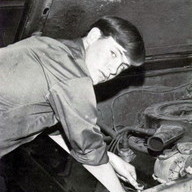
Frank, How many times have I told you to lay off that crack pipe? It's turning your brain to silly putty, Man! D.B. Cooper did his deed in November of 1971. It's true, I was living under an alias in 1971, while hiding out from my first wive in Schenectady, New York and working as a mechanic at State Toyota under the name Chad Christoffen, but, Dude, that guy and I don't look anything alike! You B trippin', Bro! The picture below is me in 1971. That poor dude next to me; I left a 6" long dog turd in the top of his Snap-On chest one day while he was out to lunch. I think the next day he was completely bald. ONE TEAM - ONE FIGHT!!! Mike Image Insert: 28.81?KB Download Attachment: mike71.jpg 26.52 KB
-
Outbuilding wiring / feed to a yard security light
hausdok replied to mridgeelk's topic in Electrical Forum
Hi Ed, I'm sorry, but I can't figure out what you mean either. Isn't there a simpler way to say it? The cable that supplies power to the yard light comes from the house wrapped around the cable that supplies power to the house from the box below the meter. Are you trying to say, "Power is fed to the service panel in the house from the service disconnect beneath the meter at the pole. From there, power to the pole light is via another cable. That second cable wraps around the first cable enroute to the pole light." If this isn't what you're trying to say, I'm completely lost. OT - OF!!! M. -
Ye Gads! That's downright scary! OT - OF!!! M.
-
I'm impressed with everyone's research effort, but direct experience won't be indexed by Google. That's an interesting case Mike, but I think the County Analyst got it wrong. It's possible that in this particular location, the aggregate used for masonry wall construction came from ground up slag, a waste product from several local furnaces (the name of that town "Cinderford" likely came from the piles of slag from all the furnaces in that area of Gloucestershire). Some slag can contain arsenic, if the furnace was operating at a temperature which did not gas it off into the atmosphere. The statement "He had found definite traces of arsenic being given off in gaseous form from the wall" is completely unsupportable. It's not possible without intense heat (like a smelting furnace). The fact that the greatest amount of arsenic was found in the victims' lungs indicates arsenic oxide, well known as being given off in deadly quantities from smelting furnaces. I'll bet they lived down-wind from the furnace. Hi Bill, I guess nobody will ever really know. That article and the puff piece for the inspector do illustrate one thing though; it doesn't matter when it occurred, these things attributed to environmental factors are pretty darned tricky to nail down and tend to generate a lot of media hype. ONE TEAM - ONE FIGHT!!! Mike
-
Some of the old texts I came across on Google Books talked about how arsenic was use a lot in dyes and inks and gave examples of folks who worked in libraries and counting houses getting arsenic poisoning from thumbing pages of books and piles of printed money and constantly wetting their fingers with their tongues. I think it's possible but I also think the probability, given the precautions people take today wearing respirators when working in dirty environments, make it very unlikely. ONE TEAM - ONE FIGHT!!! Mike
-
Hi Gary, That's the article found at the last link I posted above. Interestingly though, if you spend some time reading the literature, and the first link I posted today, you'll see that wallpaper applied over plaster was well known to have arsenic and when it became moldy gave off aresenic fumes. So, it's possible that, though tanneries did use lime and arsenic to strip horsehair, maybe the arsenic poisonings associated with plaster more than a century ago were from wallpapers and not the plaster itself. While poking around on the net, I did find a few instances where people who were remodeling their homes had become ill after breathing plaster dust during demolitions and they were casting around on the net to find out whether they'd been exposed to asbestos or not. I think it's at least plausible that some hyper-sensitive person might be affected. This sounds like something that needs to be featured on Myth Busters. ONE TEAM - ONE FIGHT!!! Mike
-
The author of the article in question may have gotten the arsenic idea here. Click on "View PDF" or "View HTML" and then scroll down the page. ONE TEAM - ONE FIGHT!!! Mike
-
Then there's this (Look at page 193), which, if someone wasn't careful to mentally record the fact that it occurred in Europe in the 1800's could fuel that kind of lore. OT - OF!!! M.
-
Hi, Not trying to throw any more wood on this fire, 'cuz I hate it when I see good friends getting riled at one another, but there's this. ONE TEAM - ONE FIGHT!!! Mike
-
SLRDs vs. Radon measurements
hausdok replied to CaoimhÃn P. Connell's topic in Environmental Hazards
So, CaoimhÃn Are you a smoker? OT - OF!!! M.