


Jim Katen
-
Posts
10,287 -
Joined
-
Last visited
Content Type
Profiles
Forums
Articles
News for Home Inspectors
Blogs
Gallery
Store
Downloads
Everything posted by Jim Katen
-
Squirrels causing cracks and missing shingles on ridge vent?
Jim Katen replied to Nancy Leopold's topic in Roof Forum
Sounds like it's time to set up a trail cam. -
Does this look like mold?
Jim Katen replied to ArVandelay24's topic in Indoor Air Quality (I.A.Q.) and Mold Forum
Each message that you write is a "post." That's how the internet works. So you're saying that the first pictures that you posted on this thread are what you came back to after returning from vacation and that before the vacation, your house was spotless. How long was your vacation? 10 years? -
Squirrels causing cracks and missing shingles on ridge vent?
Jim Katen replied to Nancy Leopold's topic in Roof Forum
It doesn't look like wind damage to me either. On the other hand, squirrels are not particularly muscular. They don't do damage like that; they chew stuff. If a raccoon wanted to get into your roof via the ridge vent, there'd be no more ridge vent left. My best guess is that the raccoon is just bored. -
Does this look like mold?
Jim Katen replied to ArVandelay24's topic in Indoor Air Quality (I.A.Q.) and Mold Forum
This is your 5th post. It says so right under your avatar. You submitted your 1st post on September 30th; it's at the top of this thread and contains 5 pictures. Eleven days later, you said that you went on vacation and came back to find a thick black layer everywhere. -
Does this look like mold?
Jim Katen replied to ArVandelay24's topic in Indoor Air Quality (I.A.Q.) and Mold Forum
Given the pictures in your first post, forgive me if I doubt that your apartment was "spotless" when you left. While you were gone, what temperature did you leave the thermostat on? -
Is there a full time operator (the guy in the polyester pants?) or does everyone operate it for themselves?
-
Yes. It's really nasty when they're metal doors. One touch and you're burned.
-
Actually, I suspect that none of this is worth your time. A 21 year old with no experience in the trades, no experience running a past business, and without a full-time mentor for several years cannot become a successful home inspector. It's just not going to happen. If your lack of technical knowledge doesn't get you sued into oblivion, your lack of business acumen will result in a failed business within a few years. My revised best advice: Cut your losses and forget about home inspections. At your age, you should find the thing in life that you enjoy doing more than anything else and figure out how to get paid to do it.
-
I used to believe that a background in home construction and the trades was not particularly important to a home inspector because most of that stuff can be book-learned. I believed that it was much more important to know how to run a business first and know how a house works, second. I now believe that both are absolutely critical. If you're trying to become a home inspector without a background in the trades, you have a huge handicap and it will take diligent study to overcome it. You might be able to pass the exam and work for several years, but eventually, your lack of knowledge will bite you big time. Most of the time, the biggest problem is that you have no idea of what you don't know. For example, the single most useful publication that you mentioned is the Code Check series of books. If you think that they're not helpful, you really don't even know what it is that you should be studying. The only thing better than the Code Check books is the codes themselves. By the way, passing the NHIE only means that your knowledge is barely competent. If you can not pass it, you are really and truly not qualified to inspect homes. Conversely, passing it does *not* mean that you are qualified. It just means that you're ready to start learning seriously. If you talk to a lot of long-time home inspectors who had a lifetime in the trades before they entered the home inspection profession, they'll tell you that they were woefully unprepared when they started out. Someone who lacks that experience is an order of magnitude below woefully unprepared - and most of them don't even know it. My best advice: stop trying to pass the test. Work at least 8 hours every day for several months to study home systems just to learn all about how they work and what rules surround them. Go right to the source - the codes or the Code Check series. Use the other books as filler to help understand the "whys." Start with your weakest area. Make flash cards. Learn the subject matter without thinking about passing a test. When you have a solid grasp of every system and component, just go take the test.
-
We got one back that way.
-
Contact GAF directly and send them those pictures.
-
Did you contact GAF and send them these pictures? Or are you merely dealing with your installer? My guess is that the ridge caps are the hottest shingles on the roof because they're installed over the ridge vent. They've just baked themselves brittle. Ridge cap shingles are considered accessories. Does your warranty include "accessories"?
-
That's simply not true. Typing at the wrong angle will give you carpel tunnel syndrome. Anything that squeezes or irritates the median nerve could give you CTS. This doesn't even touch that space on your hand. If you used it constantly, it might cause some kind of tendinitis, or irritate an existing tendinitis, but not if you use it for less than 5m a day.
-
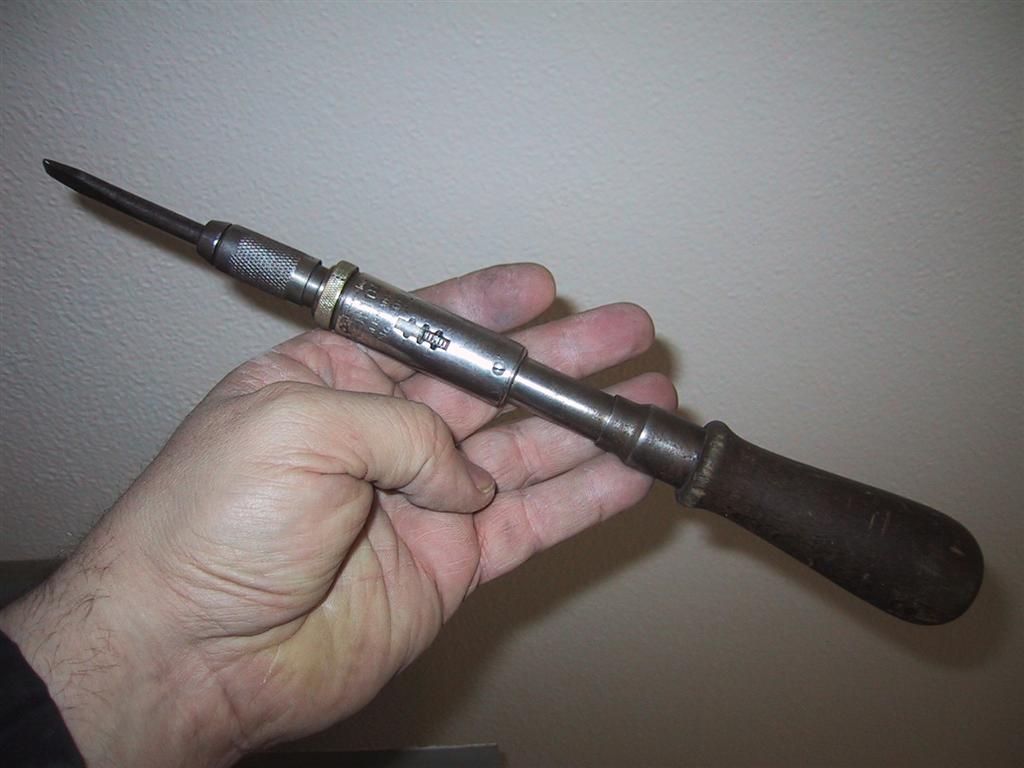
I still use this daily. It lives in the inside pocket of my vest. Once or twice a month, if there's a lot of screwing & unscrewing to do, I run out to the car and get the full-sized Dewalt. Otherwise, the Yankee does it all, the batteries never wear out, I never have to recharge it, and it's just as fast as the battery powered ones. Besides, I can lock it in the extended position and use it to test smoke alarms.

-
I've never seen this before. It's a standing seam steel roof on a log house built in 1978. I presume that the roof is original. It's located in the coast range forest, about 2 miles from the Oregon coast. (As a side note, does anyone know how to distinguish between galvanized steel panels and galvalume steel panels when they're painted like this?) This roof has many spots where the paint is gone, the zinc (or aluminum) has worn away, and the steel is rusting rather badly. Aside from those spots, the coating remains in good condition. Question: Can these rusting spots be prepped, primed, & painted to produce a durable result? Or would such an attempt be akin to patching a bald tire?
-
Foundation sitting above footing?
Jim Katen replied to Mike Lamb's topic in Foundation Systems Forum
Are clay deposits a thing in Chicago? They're not really a consideration in my area. I always associate them with Texas. -
Corrosion at SEC main disconnect lugs and metal
Jim Katen replied to Mike Lamb's topic in Electrical Forum
Corrosion like that never gets better, only worse. I'd recommend replacing the panel. This time, mount the new panel on standoffs or battens. If an electrician were to volunteer to thoroughly clean it up and move it to get it away from the wall, I'd go for that too. But in my area, no electrician is going to want to assume that risk. -
Foundation sitting above footing?
Jim Katen replied to Mike Lamb's topic in Foundation Systems Forum
I'd recommend grouting the gap. Either that, or insert several hundred more screwdrivers. -
They're using the EMT as the equipment grounding conductor.
-
If it's a condensing furnace, the switch should shut that off as well.
-
Actually, the place was relatively rodent free (for Portland, which should really be called "the city of rats.") I'm certain that urine was not at play here.
-
The whole area was very damp. You can see a bloom of green mold at the upper left side of the 1st picture. However, I saw nothing to suggest any other corrosive substances. I'm not sure why leakage of current would matter?
-
Circumscribed crack on brick chimney
Jim Katen replied to Marc's topic in Fireplaces, Chimneys & Wood Burning Appliances
Maybe the mohel was already there and the chimney hasn't had time to heal yet. -
I've never seen this before. The MC cable was secured to a basement wall with some very attractive metallic & velvet wallpaper sandwiched between the two. The cable sheath just dissolved into a white crust. My best guess is that this is the result of galvanic corrosion, where the metal in the wallpaper acted as a cathode to the cable sheath, which acted as an anode. Any other ideas?
-
Circumscribed crack on brick chimney
Jim Katen replied to Marc's topic in Fireplaces, Chimneys & Wood Burning Appliances
I once owned a house where that happened. The terra cotta liners were supporting the upper section of the chimney. I never patched it, just left it like that. For all I know it's still like that.



.JPG.9f10e24c6d929a0b6334b9373faf5a90.JPG)
.JPG.1435213ac7fe3ac6678fd2d2e3b6d1d1.JPG)
.JPG.071c60887a4bd754097518346c05fee2.JPG)
.JPG.8100fe69f5925ccb9aea79e3745bd246.JPG)
.JPG.12bf6a20b5e0ce6051eddd6d47f9c252.JPG)
.JPG.2af145043052f00785d1fca6a518e768.JPG)
.JPG.43b03e1db54c11d7d3140934dd708320.JPG)