Marc
-
Posts
6,736 -
Joined
-
Last visited
Content Type
Profiles
Forums
Articles
News for Home Inspectors
Blogs
Gallery
Store
Downloads
Everything posted by Marc
-
It's not redundant if there are concentric rings on that knockout. I'd have used the EGC bus for that, not sure why. It should be either green in color or bare copper. A cable is an assortment of conductors within one jacket.
-
I dragged this old post out of the trash heap. Your model is a higher btu/hr rating and different serial but I think this post may help guide you a little in deciding whether to trash your Airco or keep it. The response to delislej is by Howard Pike, who has posted here many times and whom I regard as the member most familiar with Airco heaters.
-
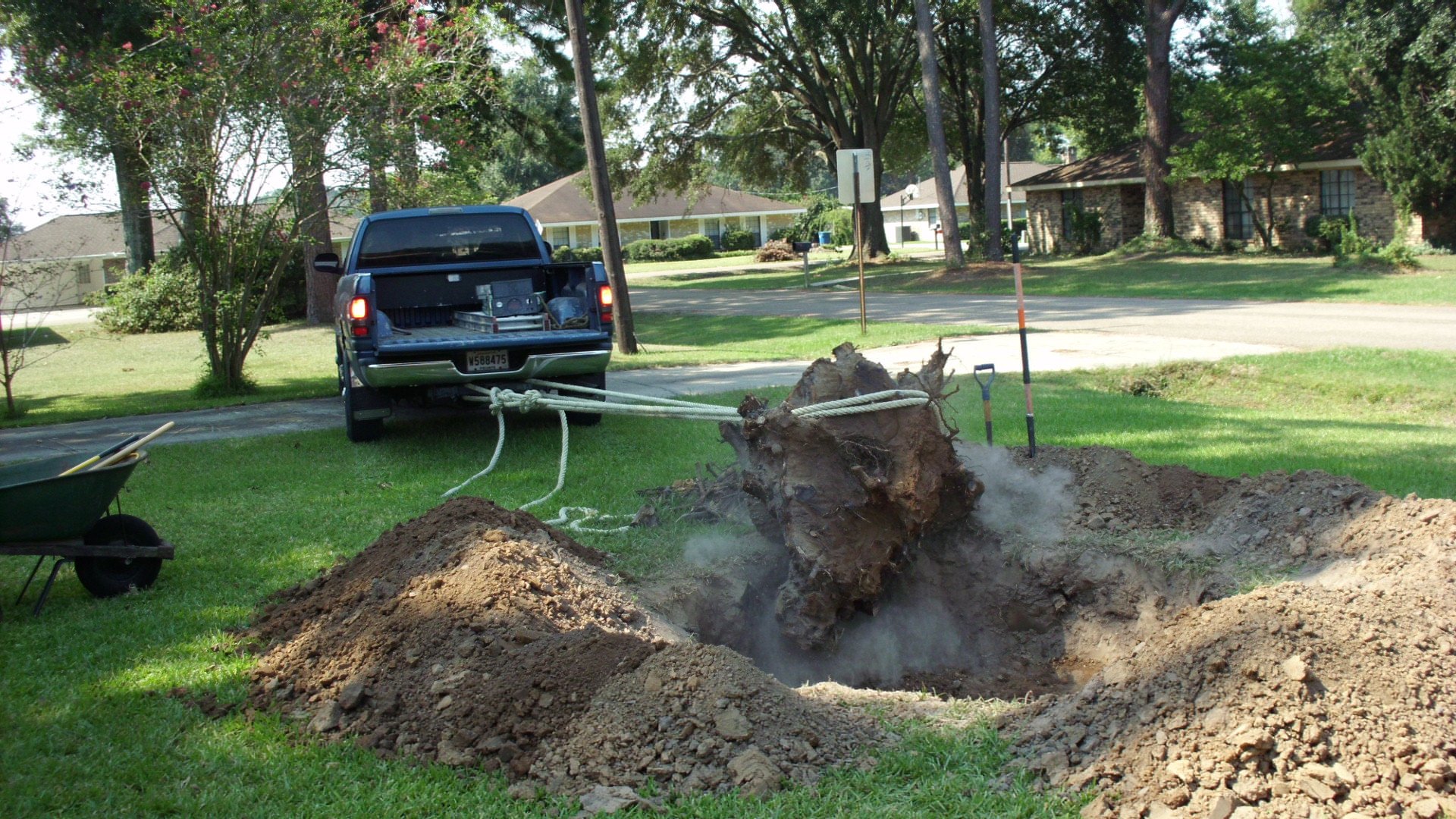
The issue isn't the termites, it's that the stumps will eventually decay. When they do, something, somewhere beneath the home will lose the support they once provided. Get the stumps out...by hand if necessary. I've done it before.

-
I have one. Same problem. I hook it into my cigarette lighter outlet when I leave home for an inspection. It's the only way I can depend on it.
-
KW is a unit of power. KVA is a calculation, equal to amperage multiplied by voltage. The two are the same when no reactive currents are present. There are two types of reactive currents: Inductive and capacitive. Motors and transformers are two of the most common sources of inductive currents. Capacitors create capacitive currents. The only energy transfer inherent in reactive currents are the I square R losses in the conductors. Utilities hate reactive power in their power lines because the I square R losses cost them money. They sometimes penalize users with large motor loads because motors create so much reactive currents. Long ago, utilities would create capacitive currents using 'over excited (field windings were deliberately over driven)' synchronous motors to create capacitive currents, which reduced the inductive currents in the power lines. Reactive power is actually power that is echoed back and forth between source and load with no net transfer of power actually taking place. Doug S, I'd suggest investing in a 3 phase power meter. Takes only a few seconds to connect it and it will show you the actual load. I have a handheld model laying around in my shop somewhere. Must be older than I am. It's about the size of a large clamp-on meter but has 3 leads coming out of it to connect to the lines.
-
If you've inductive loads, or loads that have a duty cycle, that method would not be advisable. The generator size is selected using VA demands. The engine HP is selected by using wattage demands.
-
Thanks.
-
When someone knows as much as you do, nerdy is good. Keep it up. BTW, which edition has the 'multiwire' definition? All I have is the 2008 and it doesn't have it.
-
No, it shouldn't. Maybe the GFCI breaker is simply doing it's job. Maybe there is leakage. Takes only about 5/1000 of an amp to trip it. Pull out the 1st receptacle in the string. Leave it connected but, at that point, disconnect the rest of the string then try again. See if it trips. If you're removing power from the bus, reset the GFCI breaker after the bus is live.
-
 By 'reverse jam function' did you mean 'reversing feature'? https://www.dasma.com/PDF/Publications/Brochures/maintenance.pdf
- 6 replies
-
- 1
-

-
- reverse jam test
- garage doors
- (and 1 more)
-
Much better. Still a touch of Salvador Dali to it, unless those tiles are flexible - lower left corner of drain.
-
Effective wall design for heat and moisture management is on the frontier in an environment as severe as yours, I believe. Perhaps SIPs (structural insulated panels) would be a better choice.
-
And the triangle?
-
I don't get what's going on in this photo. There's Herringbone, a rectangle and a triangle.
-
What did the gas bill do? Go up or down?
-
I could go without wearing any pants at all. Got a picture somewhere. I'll find it.
-
Likewise Mike. Excellent presentation, BTW.
-
Having a blast. Brought the spouse yesterday for the welcoming event. Meeting friends.
-
That's about 123,000 btu/hr. The largest resid gas-fueled tankless heater you'll find here is 199,000 btu/hr, so 123K isn't too bad off. The service entrances must be large and the electrical grid possessed of abundant capacity for the utility to allow such a thirsty water heater.
-
If you're seeing the exterior brickwork from the inside of the condo, then it sounds like structural brick, with little, if any, insulation. That's going to waste a lot of the heat that's produced inside the house, regardless of whether it's generated by electric heating strips or otherwise.
-
Given enough time, you're likely going to get mold growth regardless of which method you use to moisturize the air (atomize the water) but some methods might do it better with less growth. Regardless of which method you choose, occasional cleaning will still be needed.
-
I might prefer to say something along the lines of...inquire of the HOA if there are any other condo's in this building also known to have aluminum wiring and if so, what has been done about it.
-
Mold Inspectors Needed
Marc replied to Brandon Castle's topic in Indoor Air Quality (I.A.Q.) and Mold Forum
The issue, Bustmold, is not with the guidelines but with a prevailing sentiment among the members of this forum that mold inspectors take advantage of a consumer's fear of mold to get them to open their pocketbook and fork it over. Comprendo? Granted, I've not the manners of most members here, especially when that god-forsaken topic - MOLD - crops up, yet again. What Charlie said. -
south Florida Stemwall foundation questions
Marc replied to georgann's topic in Foundation Systems Forum
By 'foundation floor', I think you may be referring to what I call the crawlspace grounds. If so, it could be anything you want, or nothing at all, just soil. Soft spots could be any of several things. More description might bring better responses. -
Is this a seismic area?