Jim Katen
-
Posts
10,287 -
Joined
-
Last visited
Content Type
Profiles
Forums
Articles
News for Home Inspectors
Blogs
Gallery
Store
Downloads
Everything posted by Jim Katen
-
Just one of many reasons why I don't participate in Facebook in any meaningful way. I don't like interacting with fools, I don't like seeing people that I respect behave like fools, and I don't like the prospect of acting like a fool myself, which seems to be the inevitable fate of the participants there.
-
It looks like someone was trying to tie together the halves of multi-wire circuits. They missed a few and, of course, it would be better to use real handle ties.
-
Could be. But here's the rub: my opinion is based on observation and experience. Those have shown that there's really no way to predict what effect this will have on the future performance of the shingles. You can build a convincing-sounding train of logic to argue it either way, but the shingles can't read and will do what they do on their own. Is your opinion based on observations and experience or are you just arguing theory?
-
Aside from the cheese, those are generally bacteria & yeasts. Sure, some molds are good to eat, but if a mold is going to harm you, it's going to happen when you ingest it, not when you breathe it.
-
If the test came back with only one type of mold, either the collection procedure or the test was poor. There are always multiple crops growing in places like this. Don't worry about it, though, really. I presume you mean "effects." There really isn't a lack of knowledge, its just that in the real world there aren't many effects. If you're allergic, sure. If you're immune-compromised, probably. If you're a healthy human - just don't eat the stuff. 99% of the hype that you hear about in news reports is pure, unadulterated bullshit. Have a Coke and a smile and get back to dealing with things that matter.
-
You realize that this crack is at the top of a six story building, right?
-
It allows you to crank up the temperature of the water heater, giving you, in effect, a greater volume of 120-degree water than you would otherwise be able to store. Kind of like those cans of orange juice concentrate.
-
Unless you replace an old double-hung, single-hung, or sliding window with a new casement window, in which case, the open portion of the window is made substantially larger.
-
Thanks, that's probably it. I found a good description in this 1920 Sweets Catalog.
-
Possible, but unlikely.
-
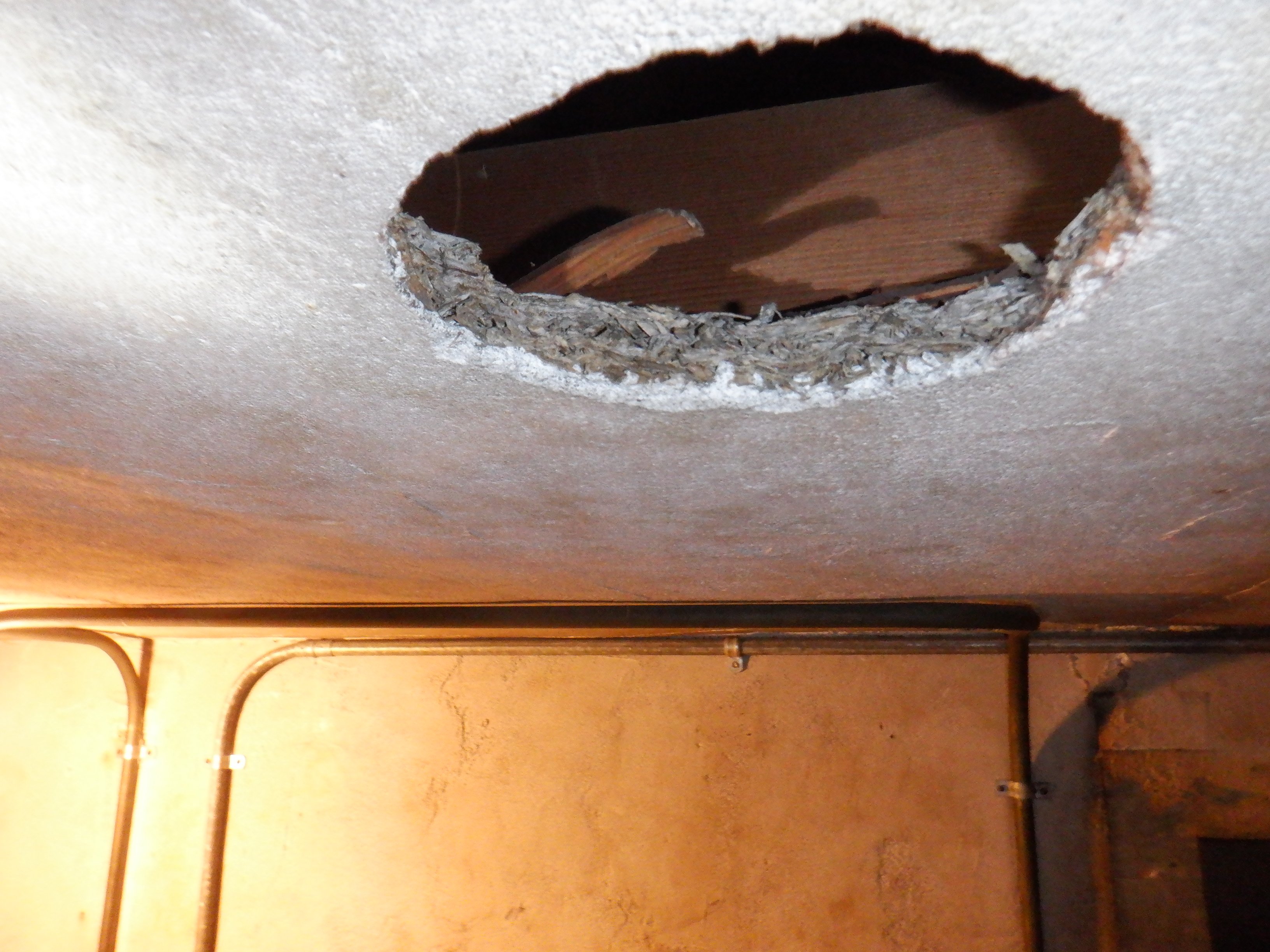
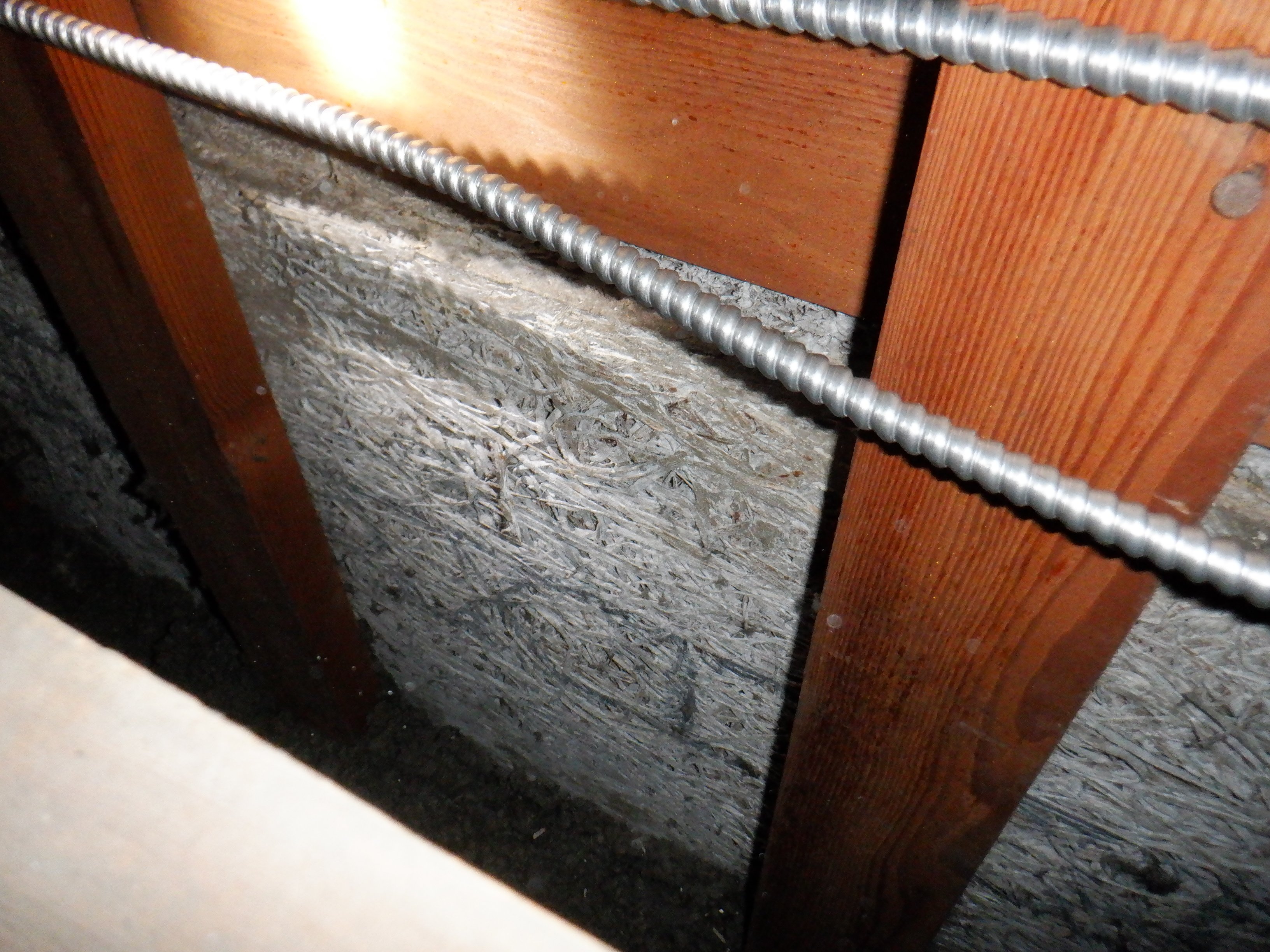
How about this one? Sent to me by another inspector. Used as backer for plaster in a 1908 Masonic Lodge. Looks like an organic predecessor to Tectum. Anyone familiar with it?

-
It think it's just the white coating shrinking and cracking.
-
conversion from LP to Nat Gas
Jim Katen replied to John Dirks Jr's topic in Fireplaces, Chimneys & Wood Burning Appliances
I don't know much about fluid dynamics, but it seems to me that you want to have a way to "dial in" the flame, not make incremental changes. I'd look at installing a needle valve upstream of the burner. -
conversion from LP to Nat Gas
Jim Katen replied to John Dirks Jr's topic in Fireplaces, Chimneys & Wood Burning Appliances
That looks like a nicely balanced gas flame. Perhaps when you put the ceramic logs in place, the flames will cool as they impinge on the ceramic? -
Good grief! Of course it's mold. So what?
-
Never seen a bearing that I couldn't replace.
-
Why not just replace the bearings on the existing motor?
-
If it were up to me, I'd still be using Windows 3.1.
-
I saw one several weeks back (months back?) It startled me, but seemed like a good idea.
-
No. Chris is talking about a stairway that runs from the kitchen into the basement. At this stairway's landing, a door opens to the exterior. In my opinion, that's still just a primary egress path. The basement is supposed to have an emergency escape & rescue opening in addition to its primary egress path.
-
Here's an idea: Instead of advising your inspectors to *never* exceed the standards, I suggest introducing the concept of "tactical exceedance." Begin by including a statement like this in the inspection agreement, "The inspector may occasionally exceed the standard of practice as a courtesy to the customer, who agrees that, in doing so, the inspector will not exceed the standard in every regard or in every instance." Or something like that. I'm sure that your lawyers can get the gist across. Then, inspectors can feel a bit more free to perform risk assessments to decide when it's more beneficial to go the extra mile or so to find problems. As an insurer, providing guidance about how to perform that risk assessment and when it's actually beneficial to exceed the standard would be a lot more useful - and do more to reduce claims - than simply issuing blanket advice to never exceed. By the way, if you implement this concept, I want full credit. It should be called, "The Katen Method" and spoken of reverently, in hushed and respectful tones.
- 26 replies
-
- 1
-

-
- claims
- pre-claims assistance
- (and 2 more)
-
I fully understand your purpose as an insurance provider. But I think that your advice is short-sighted and, ultimately, self-defeating. Inspectors don't get sued for finding problems, they get sued for missing them. The very slight increase in liability caused by exceeding the standards is far outweighed by the very great decrease in liability gained by finding otherwise hidden problems. I'm old enough to remember when inspectors first started to use moisture meters. My insurer a the time advised me not to use one and, if I were to use one, never to mention it in the report or to let the customer see me using it. Their reasoning was that using a moisture meter would instantly make my inspection "technically exhaustive" and open me up to all kinds of disastrous claims. That was dumb reasoning at the time and every inspector I know uses a moisture meter today. What really happens is that the moisture meters help to find problems and reduce the inspectors' liability. They are, of course, beyond the standards. (The same argument is now playing out with IR cameras.) Likewise, I remember when we first started to use digital cameras. Again, my insurer advised against taking any pictures during the inspection because one of the pictures might capture a defect that I didn't include in my report and that picture could be used against me in court. They were also concerned about a seller suing if I took pictures of personal property. None of that turned out to be much of an issue. (And if an inspector does take a picture of a defect and not report on it, then he or she probably should be responsible for the oversight.) In the long term, pictures reduce liability and InspectorPro (and probably every other insurer out there) knows that perfectly well (you having just written an article about how every inspector should take hundreds of thousands of pictures every minute). They, of course, go beyond the standards. You stand at one small corner of the home inspection profession and your view is distorted by your perspective from that corner. I suggest that by taking a step or two back, you'll see that advising people not to exceed the standards is actually increasing rather than decreasing the overall risk of your customer pool. Bottom line: exceeding the standards might make it a little bit more difficult for an attorney to defend an inspector, but it makes it much less likely that the inspector will need that attorney in the first place.
-
Home inspector standards of practice are the bare minimum performance standard; the floor that you stand on when you do a home inspection. They define a dollar-store home inspection product.
-
This isn't an interpretation. It's a fact. The first sentence of the ASHI SOP under "purpose" reads: The purpose of the Standards of Practice is to establish a minimum and uniform standard for home inspectors who subscribe to these Standards of Practice. The opening paragraph of the Oregon State Standards reads: OAR 812-008-0202 through 812-008-0214 of this rule set forth the minimum standards of practice required by Oregon certified home inspector. Nothing in either of these standards even comes close to suggesting that the standard is not to be exceeded. (I can't speak to the standards of other organizations or other states - especially stupid states like Texas.) By parroting myth that exceeding the standards increases your liability, InspectorPro is contributing to the problem, not helping it.
-
I think your just plain wrong here. There are, of course, times when those conflicts are present, but they're rare. In the vast majority of instances, the thing that best protects the inspector is for him or her to do that thing that best serves the customer. In other words, cover the client's butt and yours will be covered automatically. By the way, the people who framed the original standard of practice for this profession clearly intended for that standard to be a *minimum*, not a maximum. An inspection report that doesn't exceed the standard of practice is a piss-poor report.
- 26 replies
-
- 1
-
-
- claims
- pre-claims assistance
- (and 2 more)