palmettoinspect
-
Posts
350 -
Joined
-
Last visited
Content Type
Profiles
Forums
Articles
News for Home Inspectors
Blogs
Gallery
Store
Downloads
Everything posted by palmettoinspect
-
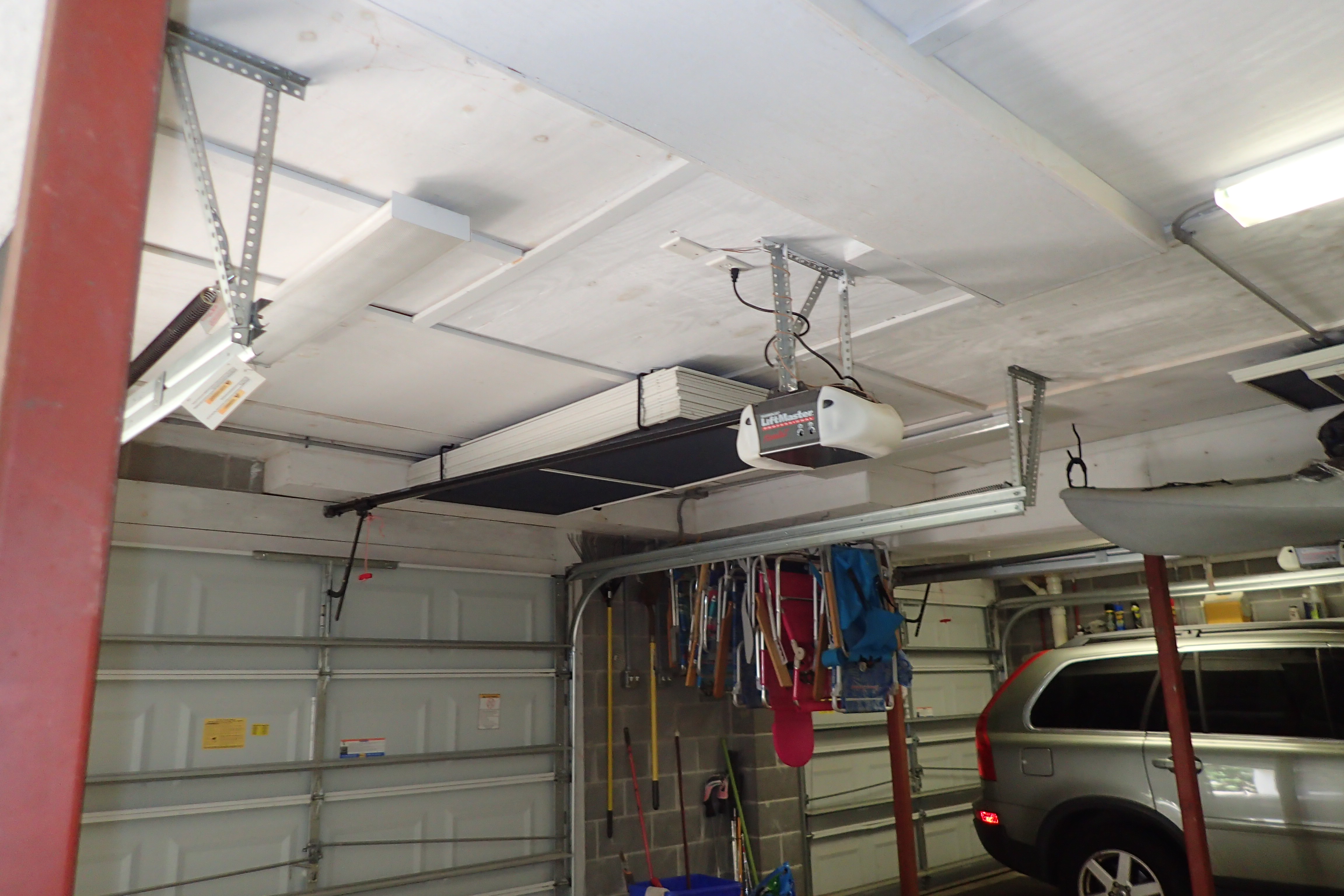
I'm getting some push back on an issue and I'm looking for some clarification. I called out the use of plywood for fire separation between the garage and living space in this home. The home is a drive under with a living area above the garage. The real estate agent is claiming she had a conversation with the building inspector and the use of plywood for fire separation falls under the 2000 code IRC r309.2. Home was built in 2003. I don't read it that way. I'm not exactly sure what the word "equivalent" means in the code though. I'm aware that there's some FRT plywood that is fire resistant, but it must be labeled if used. I can't ever recall seeing FRT plywood used at a garage ceiling though. Could "equivalent" mean the use of a different type of fire rated building material such as FRT plywood?

-
Thank you for the prompt replay Jim! Yes, there's many workspace issues! Hell, there's so many electrical issues on this home my head is spinning. I've added a few more pictures for your enjoyment. I'm going over the ways of typing it my head keeping in mind he recent articles by Jim Morrison, but it's hard with so many issues!
-
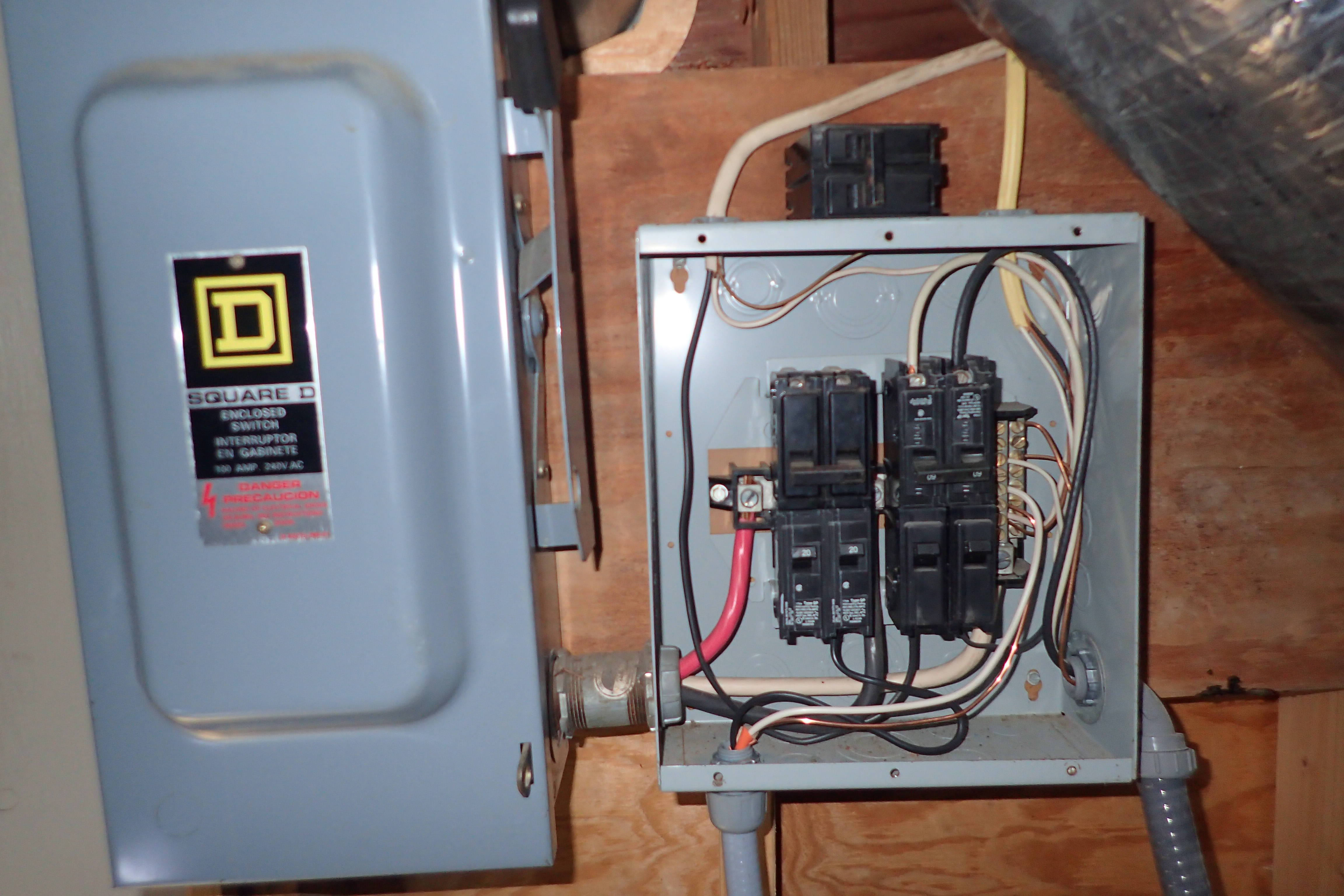
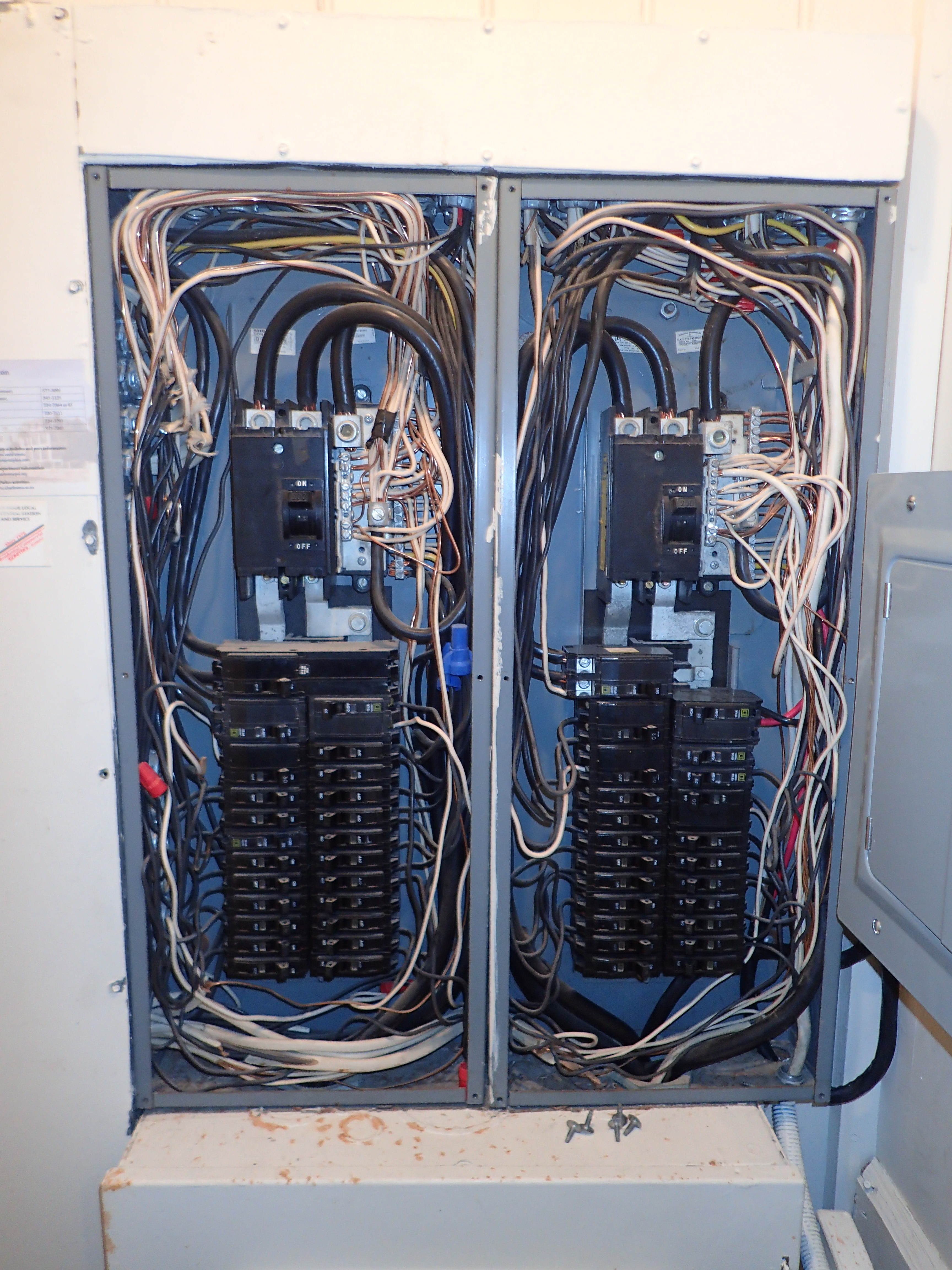
I'm kind of confused on this one and looking for some guidance. I've never seen this type of "Square D" disconnect used before. I could not get the cover to open to inspect, but it appears to feed the two 200 amp panels above and the small 60 amp panel above. My concern is two 200 amp panels are only fed with 3 wire feeders, not 4 wire and the ground and neutral wires are not separated. Given the big Square "D" box is a disconnect, shouldn't the two 200 amp panel be feed with 4 wire feeders and the ground and neutral separated? Thanks, Kiel
-
Great reads! In my experience sealing that attic with spray foam alone doesn't help much and doesn't create a conditioned attic space. You must mechanically condition the attic. Whether it's with the heating and air ducts or dehumidifiers. I've seen attics that used both the heating and air and dehumidifiers and one or the other. The problem with using the heating and air equipment and ducts is, you must install both a supply and returns. Supplies only dumping into the attic only make things worse. There must be a return to extract the moisture. The problem with many of the beach homes that truly need a condition attic is they're second homes and when vacant and not in regular use the AC isn't on and there's no dehumidification happening. In my experience conditioned attics that are sealed and use dehumidifiers, whether it's spray foam or some other type of material used to block the attic ventilation works the best. The dehumidifier being key. The dehumidifier also needs to be sized properly for the space and in some cases of chopped up attics need multiple units or ducts for the dehumidifiers are needed. I'm not a huge fan of spray foam, but will agree it's the best way to get a pretty air tight space. Conditioned attic spaces can be archived without using spray foam by just blocking the ventilation and using a dehumidifier.
-
Typically it's open cell that's used around here. You do see closed cell used in attics from time to time and it's being used more often, but mostly open cell. I think it's mainly cost. Closed cell works the best to encapsulate and stop air travel though. Many who are using spray foam in the attics are using it to encapsulate the attics more to reduce excessive humidity rather than the insulation value. The spray foam is used along with dehumidifiers to block the ventilation and reduce humidity. If you have a beach or water front home here it's a must do thing. Click to Enlarge 43.85 KB
-
Garage walls with all drywall sheathing
palmettoinspect replied to Mike Lamb's topic in Exteriors Forum
Gypsum makes an "exterior" grade drywall sheathing. It's seen on many many older 1960-80s homes in my neck of the woods. http://www.americangypsum.com/products/ ... -sheathing ETA: Typically somewhere on the paper it should read "exterior sheathing" or something similar. -
So at that point, you had a gritty, furry floor that was well stained. How did you knock down the furry fibers without removing the stain? Or did you apply the first coat of finish and then screen it smooth? Jim, Sorry for the confusion. We water popped the floor after the floor guy resanded the messed up floor back down to raw wood using 80 grit. After two hours the floor was dry and was stained. He will buff and poly the floor should be smooth. The water popping creates the rough furry wood letting it accept the stain more evenly. It worked great as for how well the stain took and looks. I think I understand your concern that maybe the furry feeling be able to be felt through the floor. I'll keep you updated.
-
Rob, In my search for what went wrong I have looked at more pictures of Jacobean than I would care too. You're correct, this particular stain and most dark colors for that matter are a pain. Jim, That book sounds like a trip! I will be reading it soon. Thank you for the reference! An update and what I have learned: The floor guy should be very experienced not only with a sander, but also how the stain is applied, and of course like anything else the prep work. In this case water popping was the key! All and all the sanding was pretty good actually, just not for the dark stain. The sanding was 36, 60, 80 which just proved to be too fine for the dark stain. Originally my floor guy used a carpet pad on a buffer to install the stain with a helper edging by hand. This was also another mistake. Hand staining proved to be the best method. The process has been painful because the floor guy while sticking it out, didn't have the experience to solve the problem and kept blaming the floor! He tried sanding and different staining techniques, but it didn't fix the problems in most areas. He was able to get one of the bedrooms to look "good enough" and the laundry room looks pretty good with better sanding, hand staining and no water popping. After a lot of reading as Rob alerted to, the Jacobean usually results in a very blotchy stain. To combat this water popping is the best method. It not only opens the pores in the wood to accept the stain more evenly, it hides the sanding marks (the lines we were seeing) as well. With a few of the rooms still looking like crap I decided to try the water popping. After another sanding back to 80, the floor was very smooth to the touch. We applied distilled water very lightly to the floor and after about 2 hours the floor was dry and very gritty and almost furry feeling. The stain took like a champ and produced a great look without blotches and without lines. The floor guy is now redoing the third bedroom and maybe the entire living room and kitchen! Thanks for the help. I will post some before and after pictures once we get everything finished.
-
Jim and Jerry, Those are my fears also! I know this refinish was at least the second time these floors have been sanded, maybe more! Who knows! I'm meeting with the floor guy this morning to discuss our options. I'm going to push for a refund and find another guy.
-
Thanks for the comments guys. I'm disappointed to say the least. I like to do everything I can myself on my own home, but have no experience with refinishing floors so left this one to the pros. I paid a floor guy good money to do this. He was a referral from another contractor I know well. I did inspect the floors when the stain was down and did not see these lines and blotches until the poly was down. The floor guy is coming out to "make it right" tomorrow, but if these are stop marks from the sander I don't think this can be fixed without starting over. Maybe some screening or buffing may help????
-
I had my red oak floors refinished and stained to a dark Jacobean color with Dura- Seal stain and three coats of water based poly. The result did not turn out so great. I have a bunch of blotches in color and lines in the stain from what I believe to be the sanding. Some of the pictures make it look worse than it actually is. I know it's really hard to tell colors and all from pictures, but what do you guys think went wrong and any chance of fixing it? I'm hesitant to let the contractor touch the floors again. Click to Enlarge 15.98 KB Click to Enlarge 7.47 KB Click to Enlarge 29.21 KB Click to Enlarge 26.12 KB Click to Enlarge 18.36 KB
-
Joist supported by flat 2x8 between piers
palmettoinspect replied to palmettoinspect's topic in Foundation Systems Forum
LOL! I had to look up what couillon meant, it's French for "turd". -
Joist supported by flat 2x8 between piers
palmettoinspect replied to palmettoinspect's topic in Foundation Systems Forum
Yes, another good point. The Joist are 2x12 and the double perimeter beam are 2x10. The span of the joist are pretty small. -
Joist supported by flat 2x8 between piers
palmettoinspect replied to palmettoinspect's topic in Foundation Systems Forum
My thoughts too guys, thank you. I just needed some reassurance as this is about the fourth house I can remember seeing recently that was done this way! I've called it out as wrong each time, but it got me thinking after seeing so many. I don't think it would be to hard to cut out some of the flat 2x8 to add the proper joist a hangers, just a lot of work. I think the framers are so used to framing a continuous stem wall and not individual foundation piers. -
Joist supported by flat 2x8 between piers
palmettoinspect posted a topic in Foundation Systems Forum
I've seen this being done a few time recently where instead of a traditional ledger strip or hanger the contractor uses a flat 2x8 between foundation piers to support the floor joists. Each time the flat 2x8 is starting to separate near the middle as seen in the second and third pictures. There is a double perimeter beam that the joists are also toe nailed into. Has anyone ever seen a floor system built this way? Is it okay? Thanks, Kiel Click to Enlarge 52.47 KB Click to Enlarge 40.53 KB Click to Enlarge 42.14 KB -
Bill, In that case, more commercial vs residential, it would probably be best to the unmanned aircraft license. Scott is correct from what I've heard. You need to know what airspace is, the differences in the air space, the heights of the air space, and safe distances to fly within or up to the airspace. There're many test prep course to take to prepare for the test. Once you understand what to study and what to learn, I'm sure you wont have a problem at all. At the end of the day it's going to be easier, faster and cheaper to get a part 107 vs the previous 333 exception. What drone did you get?
-
Bill, I've been looking into it, but have not yet and still use mine often. I see it more of a tool to help me in an inspection rather than me charging for a "drone" service. I know what the rules are, but it makes me feel better about it lol! If you're low key about it and are not posting a video of yourself flying over a football stadium, near an air field, over a fire or something, you'll stay out of trouble. Most police or authority for that matter don't know the rules. There really isn't anyone to enforce them as of yet. The worst that has happened to someone is a phone call from the FAA telling you to follow the rules. Youtube is full of videos of "illegal drone activity".
-
Unusual "patina" on copper plumbing
palmettoinspect replied to David Meiland's topic in Plumbing Forum
Yep, looks to be the same type of corrosion you'd typically see under a bathroom sink where all the cleaning chemicals are stored. My wife spays this clearer (Scrub Free) on the tubs to clean them and they eat the drain to the point where it needs to be replaced. Works great at cleaning the tubs though. -
Sub panel feeder tapped to main panel hot bus bar
palmettoinspect replied to palmettoinspect's topic in Electrical Forum
Thank you for the reply and clarification guys. Jim, you're correct. That lug is for the main neutral and the neutral for the sub panel is also picked up off the same lug. The equipment grounds in the sub panel were jacked up. They were all secured under a few lugs bonded to the panel which I guess works, but some were not connected at all, while others were pig tailed together with only few wires running to the equipment ground lugs. Click to Enlarge 49.05 KB Click to Enlarge 51.48 KB Click to Enlarge 47.88 KB -
Sub panel feeder tapped to main panel hot bus bar
palmettoinspect posted a topic in Electrical Forum
I recently looked at a 1983 home with a 400 amp main panel where the sub panel was fed by taps directly off the hot bus bar. It looks like the space was intended for taps, but this is the first time I've seen such a thing. The 4 wire feeder wire runs in a short conduit through the wall to the sub panel next to the main panel to a 200 amp main breaker at the sub panel. The neutral and grounds are separated and every thing else is correct except for the the ground wires that are pig tailed together and then secured under a single lug which I'm going to note need repair. Are taps on the main bus bar okay as long as there is over cut protection at the sub-panel? How would I determine if such an installation is okay? Manufacture label? Thanks Kiel Click to Enlarge 48.06 KB Click to Enlarge 53.96 KB Click to Enlarge 39.12 KB Click to Enlarge 46.12 KB -
No ground in panel 1987 Condo
palmettoinspect replied to palmettoinspect's topic in Electrical Forum
Thanks guys! -
I recently did a 1987 6 story condo building where I found something interesting that I've never seen before even in other units in the same building. The main disconnect is at the meter and a three wire feeder to a sub-panel in the unit. Branch wiring is armored cable with white and black or red. There's no ground wires or ground bars. The outlets are three prong and are grounded to the metal box. I assume the ground is picked up through the metal conduit for the panel. With some research I've determined this was once acceptable, but I have some questions I want to better understand. The GFCI breaker for the bathrooms will trip with the button, but not a tester. I assume this is normal and like using the neutral as a ground on an old cloth wrapped two wire system? The sub panel is a Square "D" panel and it looks like the neutral bus is bonded to the panel still. Shouldn't this be removed? Also, it looks like at some point a circuit was added and a green ground has been added to the neutral bar. Should this be removed and the metal box used as the ground? How should a new circuit be installed? Thanks, Kiel Click to Enlarge 33.55 KB Click to Enlarge 42.1 KB Click to Enlarge 35.31 KB Click to Enlarge 37.09 KB
-
Copper roof colors are always so pretty. The only roof that looks better with age! Click to Enlarge 67.5 KB
-
It looks like a product similar to Seal-o-Flex or Hydro-Stop. Commonly refereed to as Liquid Applied Deck System. They're quit popular around here. There's a few different brands that have similar product system and many different finish coats so identifying the exact manufacture is difficult. I usually refer to them as a Paintable Rubber Membrane or Liquid Applied Deck System. They require periodic recoats every so many years. The system in the pictures you have is in poor shape and is in need of a repair/recoat. I wouldn't be surprised if there's leaks. http://www.emagcloud.com/Siplast/Sealof ... eMagV2.pdf
-
In the south we call it lap siding or beveled siding. Never hear "clapboard" used.