John Kogel
-
Posts
3,860 -
Joined
-
Last visited
Content Type
Profiles
Forums
Articles
News for Home Inspectors
Blogs
Gallery
Store
Downloads
Everything posted by John Kogel
-

inert materials burial on site
John Kogel replied to Jim Baird's topic in Landscaping & Site Drainage Forum
Concrete or stone is inert, wood is not. Pile burning is almost never allowed anymore here, air quality issues. Wood goes to a chipper, where it is transformed into landscaping material or composted with food waste. We have weekly curbside compost collection here. Sounds wonderful but people downwind from the composting plants have to live with the stink of rotting food, including fish and meat. That rotting food would be better buried for a year or so. -
Your cheapo tester will give you neutral and hot by covering one slot with a finger while sniffing the other. IOW, if you cover the hot slot, it won't beep. Best to carry a couple of them, range of sensitivity. I'd keep my good one in my bag to confirm strange readings.
-
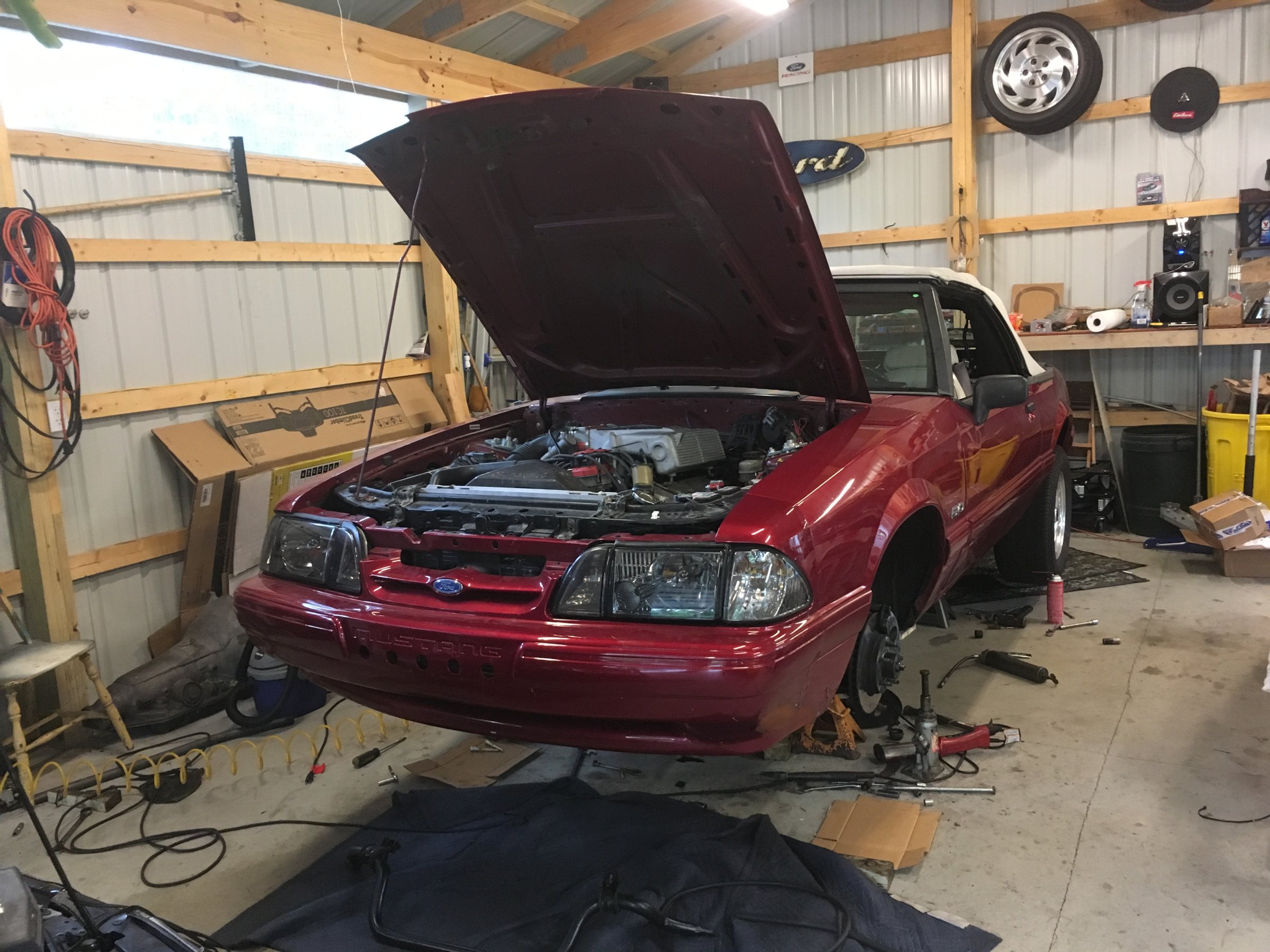
I remember doing 'rings and bearings' on mid-50's trucks and sedans with the block in the car. The shop had a pit, tho, so you had good access from below. It was called a grease pit and cars needed a lot of grease every oil change. I love that engine lift rig you bought, John. And dollies to push the car around in the shop, Pretty slick. There a heat lamp on a pole that works good for when you're working in one place for a long time. I was thinking a kind of portable paint booth would be handy for trapping heat. Anyway, spring is just around the corner!
-
I imagine the satellite dish was gone?
-
Never install unvented gas logs if you want to keep breathing clean air. Anyway, you have chimneys. The best solution to your gas fireplaces venting into old brick chimneys is to have metal liners installed. The liner is sealed to the housing of the gas unit so no fumes enter the old flue. A metal cap keeps the rain out and protects the old mortar. That means you would be installing fireplace inserts with glass fronts.
-
Timer switch is a suspect. One more switch - the door switch. But the motor runs, so it is not that. Check your old parts to see if one was faulty, measure for continuity with a DMM. Then you will know if you got wires crossed or loose n your repair.
-
That's a cozy workspace you got there, good job on it.

-
Take some clear pics of the rust after you get the deadfront off. Then if you post them, someone here will advise you, usually muy pronto.
-
Sure, I understand your position on that. You are saying the interior of the panel is not accessible because of the paint. And in a multi-family building, there would be the time factor to consider, because it can take a while to get that cover off. Even so, it is important for someone to open those panels up, so eventually there will be some cutting and scraping.
-
Can't blame anyone for painting them uglies. Mike, I believe there were problems with the internals of FPE breakers in addition to the Stab-Lok bus issue. So I would call for replacement of all of them. They are antiques. Re: Paint on the deadfront, I will scrape just enough paint off the screws and cut around the edges so that it can be removed, so the paint issue is pretty minimal after that. You could describe the panel cover as 'repainted' in the report. My take on the no paint issue was that it is meant to prohibit paint on the interior.
-
Brand new. Where to start?
John Kogel replied to Jake Smith's topic in Professional Home Inspection Associations
Yeah you need to know code, and answer questions about code. But I can usually call it best practice or similar, dealing with an older home. You can use 'not in compliance' if you are restricted from mentioning codes where you work. New construction,, the building must meet the current code standards, so definitely you need to know what you are looking at for those inspections.. Even then, if the building was started, permit issued before a code change, the old rules apply. Builder save money every way they can. Sometimes it is permitted. -
Brand new. Where to start?
John Kogel replied to Jake Smith's topic in Professional Home Inspection Associations
In Texas, you will be working under the TREC rules, which are not very similar to California HI regulations. But don't ask me, I'm just a casual observer. Sign on with a multi-inspector group for a couple of years. That is one way that will get you up to speed faster than sitting at home waiting for the phone to ring. You need advice at first, because the training never gives you all the answers. A lot depends on the housing in your area. You need to learn local issues, what will fly and what won't. But you start with the basics, always. Find a copy of the inspection Standards of Practice, that is your basic guide. Marketing is half of your business and for many it is the hardest half. The inspection part is easy, but getting folks to call you instead of him, that is tough when you're new. -
Hey John, bring us up to date on your backyard projects. Surviving the winter?
-
Right, I guess those studs weren't needed either.
-
Thanks, Marc, but Chad planted the seed. When in doubt, E=IR, no matter what.
-
Another How to treat this MOLD situation
John Kogel replied to JDG's topic in Indoor Air Quality (I.A.Q.) and Mold Forum
Right, a high reading for dander, could that be from old carpets? Get rid of old carpets and curtains. -
Could it be an extra bright bulb for signals or emergency flashers? They get very hot if left on. You could probably find a small 12 v running light bulb that wouldn't get as hot. Just a guess.
-
Another How to treat this MOLD situation
John Kogel replied to JDG's topic in Indoor Air Quality (I.A.Q.) and Mold Forum
Right, that house needs dry heat, a wood-burning barrel stove would be good, but also electric heat is a dry heat source. Then there needs to be ventilation or even a dehumidifier until the walls dry out. The heated air has to circulate everywhere, so sometimes electric baseboard heating in every room is better than having a central fire. If that's too costly, then lots of heating ducts including return air ducts for an efficient central heating system. This is what we do in the land of mold, the Pacific NW. Where I've been asked to sniff out mould, it was almost always a result of poor air circulation in unheated spaces. -
I think you are right about not being able to confirm that it is listed. From the picture it just looks like the black poly pipe that we would use for irrigation or such. Also those look like flaky clamps for hot water under pressure.
-
Here, the tank needs to be inspected every 10 years. The furnace oil company usually does this, and how is up to them, but a pressure test is normal. Then a label is attached with the date. That tank would fail the inspection. Not likely it would be patchable either. The tank inspector is not going to pass a tank that could flood the basement. A few years ago now, a house had to be demolished after a basement oil spill. People are not as resilient as they used to be, as it has a lot to do with carcinogens in the oil. The other issue is spills from outside tanks flowing into fish-bearing creeks. That is why the tanks are inspectied every 10 years.
-
Joining Word file together
John Kogel replied to Marc's topic in Computers & Reporting Systems Forum
Sounds like you got it. I had to learn to copy and paste everything when I bought a Vista machine years ago. Before that files were moved, same result. In Windows documents, like Rich Text Documents, there is a menu, drop down box, with dozens of fonts. You highlight the text, then choose font from the list, easy to do. -
Joining Word file together
John Kogel replied to Marc's topic in Computers & Reporting Systems Forum
If it's a MS rich text doc, there is a menu for attaching files, but can you not cut and paste? -
Neutral wires tied to neutral service wire in panel
John Kogel replied to Mike Lamb's topic in Electrical Forum
A ramification would be that if the neutral ever needs to carry current in excess of 20 amps, those puny wires will burn up. I think a section of the original neutral is dangling there, could cause a spark or come in contact with a hot. There have been a variety of flaky modifications to those panels. They need to be rewired properly for safety. -
Yes, back stabbed connections are bad enough, but when they are daisy-chained, the bad connections are in series, leading to what you are finding there. I don't know the NEC rule, but here, all outlets must be pig-tailed except the last one in the circuit. Back-stabbing is allowed for individual outlets but not to feed through. Best practice is to use the screws, using a good stripper that doesn't nick the wire. With needle-nose pliers, form a clean hook 3/4 of the way around the screw in a clockwise direction so that it tightens with the screw. Years ago I discovered that when you have excessive voltage drop, in my case a bunch of daisy-chained extension cords, the wiring at the low voltage end of the circuit starts to overheat when the circuit is loaded with something like a space heater. In my case, I was walking past the shed and saw wire insulation on fire. I think as voltage drops, current increases to produce the same power output. That excessive current leads to hot spots and fires.
-
I bet you will find back stabbed connections are the problem, if what you say, they did not install pigtails, and are feeding the circuit through the back-stabbed receptacles. Good Marrette-type wire nuts work fine if they are sized correctly and installed right. Connecting more than 3 wires, you will sometimes get one strand that doesn't get crimped by the nut. But you know all this. Good luck with the project.