
All Activity
- Yesterday
-
 dyniswynn joined the community
 -
 Invitation Guru joined the community
 -
 ChatWithDr joined the community
 -
 Apiyswene joined the community
 -
 DavidTuh joined the community
 - Last week
-
 Diluxe Detailing Ltd joined the community
 -
 Hi everyone, I’m based in Olympia, Washington and looking into getting my roof cleaned due to moss buildup. I’ve seen prices vary quite a bit, so I wanted to ask what others in this area are typically paying. Does the cost mostly depend on roof size, amount of moss, or the cleaning method used? Also, is it worth hiring a professional, or can it be done effectively at a lower cost? Any local insights or experiences would be really helpful.
-
- 1
-

-
 Meinautoverkauf.de changed their profile photo
 -
 navutthangroup changed their profile photo
 -
 homepcfix changed their profile photo
 -
 ChiuVention changed their profile photo
 -
 Tiny Topanga changed their profile photo
 -
Hi from Kelowna.....was checking out my Airco which is working just fine.....was thinking about a new furnace but reading this blog decided...."WHY"......not many reasons Model....AH-130 Serial...U3-91 Can anyone tell me more??? tune up myself each fall before use... Thanks...Ken
-
 KIMARIE GROUP changed their profile photo
 -
 Mbany Real Estate changed their profile photo
 -
 etsy changed their profile photo
 - Earlier
-
 smartexams changed their profile photo
 -
 WhiteFox changed their profile photo
 -
Hey everyone, I recently inspected a roof where I noticed a fair amount of granule loss on the asphalt shingles, especially near the gutters and downspouts. The roof doesn’t look extremely old, which made me question whether this is just normal wear and tear or a possible sign of premature shingle failure. There were no major leaks visible from the interior, but the granule buildup in the gutters was definitely noticeable. In your experience, at what point do you consider granule loss to be a concern worth calling out for replacement? Appreciate any insights
-
Stucco siding brought onto the roof shingles??
Nicholas Thompson replied to Kristie Brown's topic in Roof Forum
No, shingles generally shouldn’t be tight against stucco. There should usually be a small gap/clearance with proper step flashing and counterflashing/kickout, not shingles jammed into the wall. Even if there’s flashing behind, contact with stucco can trap moisture and debris and cause problems later. -
Squirrels causing cracks and missing shingles on ridge vent?
Nicholas Thompson replied to Nancy Leopold's topic in Roof Forum
Yes, squirrels (and sometimes raccoons) absolutely can damage ridge vent shingles, especially if they think warm air is coming out and they’re trying to get in. But if it’s happening repeatedly in the exact same spot, I’d also question the ridge vent install, shingle fastening, or whether the cap shingles are too brittle/overexposed there. The scratches on the vent help support the animal theory, but I wouldn’t rule out an installation/detail issue yet. -
Roof Maxx is basically a soy-based shingle “rejuvenator,” not an acrylic coating. The idea is it soaks into aging asphalt shingles and restores flexibility, which can help on roofs that are still structurally sound, but it’s not a fix for bad flashing, leaks, nail pops, lifted tabs, or heavy granule loss. So IMO: not total snake oil, but definitely not a miracle either best case it may buy time on a borderline roof, worst case it delays the inevitable.
-
Stucco siding brought onto the roof shingles??
Nicholas Thompson replied to Kristie Brown's topic in Roof Forum
Shingles shouldn’t directly touch stucco there should be proper flashing and a gap to allow water to shed and avoid wicking into the wall. If the roofer installed flashing behind the stucco and under the shingles, that may be okay, but check the shingle manufacturer’s installation guide. Some require a small clearance from vertical surfaces. It’s worth confirming otherwise, you could see water intrusion or premature shingle wear later. -
Filtering the cold inlet and flushing the heater makes sense for long-term maintenance. But in a case like he described where the dip tube already failed and debris is moving through the system wouldn’t a temporary filter on the hot outlet help catch the remaining particles before they reach fixtures and appliances? Just wondering if running one for a short period after repair could save a lot of aerator cleaning while the system clears out.
-
David, I agree with your point about proper matching and airflow being key, as long as the air handler and outdoor unit are correctly paired and the duct design isn’t excessive or restrictive, the temp split should generally fall within expected ranges.
-
Using multiple mini-split style outdoor units with conventional air handlers can still deliver good temperature differentials similar to traditional big-box systems if properly sized, and consistent airflow is maintained. The Frigidaire FFPA1422U1 use and care manual highlights tips for efficient operation, maintenance, and troubleshooting to ensure optimal cooling and energy efficiency, which applies well when integrating new configurations like this, keeping systems balanced and performing as expected.
-
It sounds like they’re using mini-split-style heat pumps with traditional ducts, so the temperature differential might be slightly lower than conventional large outdoor units, but efficiency can still be comparable depending on system design.
-
 It sounds like you’ll likely need properly sized Category 1 (B-vent or C-vent) metal flue pipe, sized to handle both the 100,000 BTU fan-assisted furnace and the 40,000 BTU water heater with minimal bends, and installed per NFPA 211 clearances, but confirming exact diameters and configuration with an HVAC professional or local code inspector is essential before final purchase.
 -
Nice topic!
-
Do you know if the air handlers are properly matched to the mini-split outdoor units’ capacity? Generally, as long as the system is correctly sized and balanced, the temperature differential should be similar, but mismatched components or long duct runs can reduce efficiency and airflow.
-
Do you know if the air handlers are properly matched to the mini-split outdoor units’ capacity? Generally, as long as the system is correctly sized and balanced, the temperature differential should be similar, but mismatched components or long duct runs can reduce efficiency and airflow.
-
Thanks. CNewhouse.
-
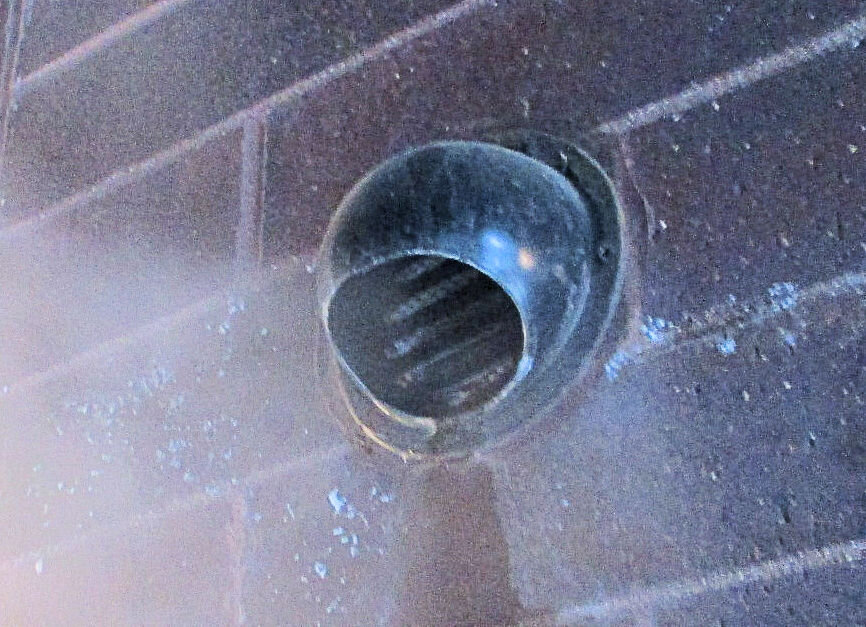
https://www.hvacquick.com/products/residential/Bathroom-Ventilation/Discharge-Caps/Seiho-SFX-Series-Aluminum-Louvered-Vent-Caps-With-Hoods?gad_source=1&gad_campaignid=19098719225&gbraid=0AAAAAD_v8vP1Pyw2OW4s8t6adaMxD4UVY&gclid=CjwKCAiAkbbMBhB2EiwANbxtbQV3WjiYwl0U91VblvVd8CP6eUL5UHIIRUTnqfrYxJ41CxBbSSSQqhoC68wQAvD_BwE I've seen those a few times. Typically for an exhaust fan.
-
Has anyone seen this type of vent? I hope its not for the furnaces.

-

Water heater hot water trapper - good idea?
WilliamGeorge02 replied to gawdyho's topic in Plumbing Forum
It’s better to filter the cold water inlet and flush the heater regularly rather than putting a trap on the output. -
Hello Jason. I was thinking about the same topic couple days ago. So far I have come to the conclusion that there is couple of ways we could go about it and so far it is better to stay off and distant as much as we can if possible. Here is my experience: A techy customer got his report and put it into one of those services and He got numbers in 3 ranges: low , mid and high. He even called couple of contractors to compare prices and said that AI was off for couple hundred dollars. His deal felt thru because the sellers did not accept his repair request, his numbers were to high even in the low range. As for realtors I would not mind too much about them , trying to get numbers without killing the deal for themselves… We all know the low balls they try to pull off when they know the house committed suicide by itself. Another customer did the same thing after the repair request and negotiations and all that [ and repairs performed by Joe hold my beer ] , and He was short for a couple thousands on a defect that needed more repairs that the offered by sellers… Try to copy and paste a random summary of an inspection you have performed and ask google Gemini to give you an explanation followed by numbers and check in your local market if the numbers are off or not… I tried one summary and I got the impression that google numbers were about right; but I would not offer that option to a client , it is better that they do their own research; that way we are not the ones in the middle trying to inflate their expectations.
-

Low slope roof insulation question
fenceanddeckconnection replied to Whalen68's topic in Attics & Insulation
For your 10x15 room with 2x8 trusses and 2x4 roof deck, use rigid foam board insulation between the trusses for excellent thermal performance. Add spray foam or fiberglass batts to fill gaps and improve air sealing. A vapor barrier is important to prevent moisture buildup before installing the ceiling. This method ensures energy efficiency and long-lasting comfort. Good luck with your renovation! - Fence and Deck Connection -
Every inspector knows the rule: Don’t give repair estimates. It’s there to protect us — keep the report factual, not financial. But after two decades in this business, I’m starting to wonder if that same rule is also what’s boxing us in. Clients still expect numbers. Agents still push for “rough ideas.” And when we stay silent, they go looking elsewhere — contractors, Google, TikTok, whoever will talk. Meanwhile, we’re left looking like we’re hiding something. Now, new AI tools are showing up that analyze inspection reports and generate local cost ranges automatically. No inspector input, no opinions, no bias — just data. It’s doing the one thing we’ve been told not to do for twenty years: talk about money. That should make us stop and think — not because it’s replacing us, but because it’s saying out loud what the market’s been begging us to say all along. What do you think? Are we protecting our professionalism, or just protecting a rule that stopped protecting us a long time ago? — Jason Boni Guardian Home Inspection, Pittsburgh PA 21 years in the field
-
That's beautiful.
-
That's what they tell me. Boats and Corvettes seem to fair OK. It's recoatable, but not really easy to recoat. It requires thorough sanding followed by cleaning with acetone. (I already recoated it once becaue it was the wrong color) I figured the worst thing that can happen is it fails miserably. If that's the case, it'll make an excellent substrate for something else.
-
And the gel coat is stable in UV light?







.thumb.jpg.47289739c2f0532f4faffd07858bee59.jpg)
