Bill Kibbel
-
Posts
4,047 -
Joined
-
Last visited
Content Type
Profiles
Forums
Articles
News for Home Inspectors
Blogs
Gallery
Store
Downloads
Everything posted by Bill Kibbel
-
Entablature.
-
The triangle is called a pediment. The arrows are pointing to the horizontal cornice. The sloped parts are the raking cornice.
-
Cheap crap ends up costing more. If I wear $30 shoes, they don't make it two weeks in this gig. Spend over $100 and they last till I can't remember when I bought them. Buy a torch that lasts a decade, or more. Buy top of the line from a good vendor and they'll send you replacement bulbs, switches, etc. at no cost.
-
I was hired to testify in a case about a claim that an agricultural building contained a dwelling unit/accessory apartment. The ruling was negative. Everything boiled down to one item. The building was equipped with everything for occupancy except a means for a permanent cooking appliance.
-
I think all conductors, including the equipment grounding conductor, are required to be in the same cable, raceway, trench, cord, etc. (Jim K or Chad will correct me if I'm wrong.)
-
Here in radon central, I've never seen it. I've seen plenty of condensate bypass systems though.
-
The installer wears Crocs. The holes let all dignity drain out.
-

Attic Mold Boiler Plate
Bill Kibbel replied to Mike Lamb's topic in Report Writing and the Written Word
I was taught (30+ years ago) to write reports without referencing myself as being the one that conducted the inspection. There was no reason, it's just what everyone did. It continued until I started getting really good advice and examples here at TIJ. "I am open to new ideas if someone's got a good replacement for "further evaluate". Don't replace it, eliminate it. Jim K. posted a perfect example. "If the presence of mold bothers you, hire a contractor to remove it - but be aware that it'll just come back again if you don't fix the moisture issue first". No kicking the can, no reference to mold is gold scam artists. No perpetuating the myths. -
Light well is the recent term. When the Tenement House Act was enacted - all windows had to open to plain air - it was called an air shaft (where all the tenants dumped trash and emptied chamber pots).
-
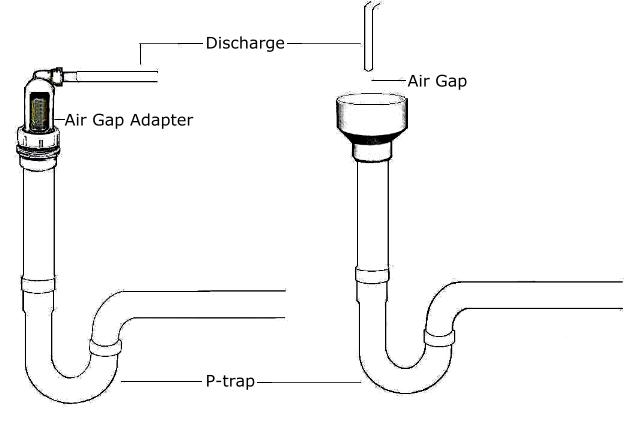
"Indirect" needs an air gap. More and more municipalities are requiring an acid neutralizer for the condensate. Does that P-trap have a long enough trap arm?

-
http://www.limeworks.us/lithomex-more.php http://www.limeworks.us/lime-paints-more.php
-
Repair the limestones with Lithomex. Coat all with lime paint - the best permeable water repellent for limestone. Both the above are lime based from St. Astier available at Andy DeGruchy's Limeworks.
-
My notes state that Crane ceased manufacturing HVAC products in 1968.
-
I've seen it in a few mills, a couple old factories, a very large church, a large city hall, and several timber bridges. I don't know what they were called in early buildings but a phrase used in the mid - late 20th century is nail-laminated timber deck and nail-laminated lumber deck. I've seen it in plans as NLT decking.
-
Plastic Vent Connector 80 percent Efficient Furnace
Bill Kibbel replied to greyboy39's topic in HVAC Forum
I've seen hundreds if not a thousand without any failures. There are heat resistant plastics/polymers that can easily handle the heat from a furnace and more. I have a car with a turbo that has plastic parts. How many vehicles have water pumps with plastic impellers and housings? there's even plastic valve covers now. Gonna see all plastic combustion engines in some cars soon so makers can meet the 2020 CAFE standard. -
Never seen it. Guess 1. A lightning arrester. The second wire slowly discharges to a ground spike. Guess 2. A transformer for an in-ground mole or gopher zapper.
-
Dust mask won't block Hantavirus. Need a respirator with P-100 filters.
-
The manufacturers' instructions usually contain very specific details about if, where, and how the intake and exhaust piping can increase or decrease dimension. Same with direct exhaust water heaters. After looking at just a few different manuals, you'll see there's no rule of thumb. More often than not though, a diameter increase for the exhaust is not permitted outside of the furnace cabinet.
-
Both service legs are attached to buses. The 70 amp breaker supplies a separate pair of buses below. Don't need a single main breaker, but there are supposed to be no more than 6 breakers/disconnects in the top part to shut off everything. The one pictured has 7.
-
I've seen square duct brushes but the smallest is probably 6x6". Get a round brush and trim the bristles to square. I've always relocated my laundry rooms so the dryer meets an exterior wall.
-
What is the name for this exterior piece?
Bill Kibbel replied to Mike Lamb's topic in Exteriors Forum
I don't like the term, but it's commonly referred to as water table trim. -
Ride Along Request NOVA Area
Bill Kibbel replied to kyarbough's topic in Home Inspection Licensing and Pending/Legislation
I suggest getting with the folks at the NOVA ASHI chapter. Most chapters welcome new inspectors, usually the first couple/few meetings before requiring membership. Many chapters don't meet in the summer though. You're more likely to get folks to take you out if they meet you first and see a professional demeanor. -
Woodpeckers going after carpenter bee larvae.
-
I've seen them in cast iron and stamped steel. The last one I saw was labeled NoCare and ran on DC.
-
Planer envy.