Bill Kibbel
-
Posts
4,047 -
Joined
-
Last visited
Content Type
Profiles
Forums
Articles
News for Home Inspectors
Blogs
Gallery
Store
Downloads
Everything posted by Bill Kibbel
-
First, we need to know where/what climate zone. If that's K&T wiring still in use, it should be replaced before adding insulation.
-
You are in Singapore - this text was copied and pasted from a post in a UK forum 3 years ago. You could have at least kept the paragraphs.
-
Yes. I emailed Mike B about yesterday.
-
I think it was added in the 2006 IRC but subsequently removed - not sure when. I suspect any reference to that requirement is now an amendment by specific state or municipality. The quote above looks like a suggestion for that amendment to the Seven Hills, OH code.
-
Hi Mathew, Look into the Armstrong Cork & Insulation Co. They manufactured many products for industrial processes and almost all of the cork building materials - and there are many. Duct insulation was one of their products. I see it occasionally - not real common in residential.
-

Web Site Hosting Suggestion?
Bill Kibbel replied to Bill Kibbel's topic in Computers & Reporting Systems Forum
Thank you, Tom. I'll check it out. Don't need no skinny cows. -
I've been with Netfirms for over 20 years. When they were bought by EIG, customer service went to shit but I still liked the low renewal fee. I just found out my hosting accounts are auto-renewing at 2.5 times the previous years rates. Certainly no longer worth remaining there. Suggestions welcome please.
-
Hi marc, I think you are referring to a lead "closet bend", that was usually installed when caste iron was used for most of the waste & vent system. Sometimes lead drains from sinks/tubs/showers were also present, but often already replaced. These lead bends were used mostly from the very end of the 19th century through the 1930s. Most common during the teens and '20s. This is the time that many cities passed ordinances prohibiting use of lead for more than 2 feet. I've encountered some from the early '40s, but these are almost always in government or military buildings. Here, during the 1930s, K&T phased out to conduit and BX before non-metallic cable was used. This is in the towns and cities. Rural areas often didn't have electric until NM was pretty standard. Of course, a majority of the rural buildings I inspect had plumbing & electric added long after initial build. I think structural components, millwork and hardware more reliably reveal more about a building's age than systems.
-
The "delaminating" is probably just the paper wrap. Most decking issues are discovered when the existing roof covering is removed, resulting in a panicked call to the lumberyard. I can't find it now. I've purged most everything that doesn't relate to pre-1940 buildings.
-
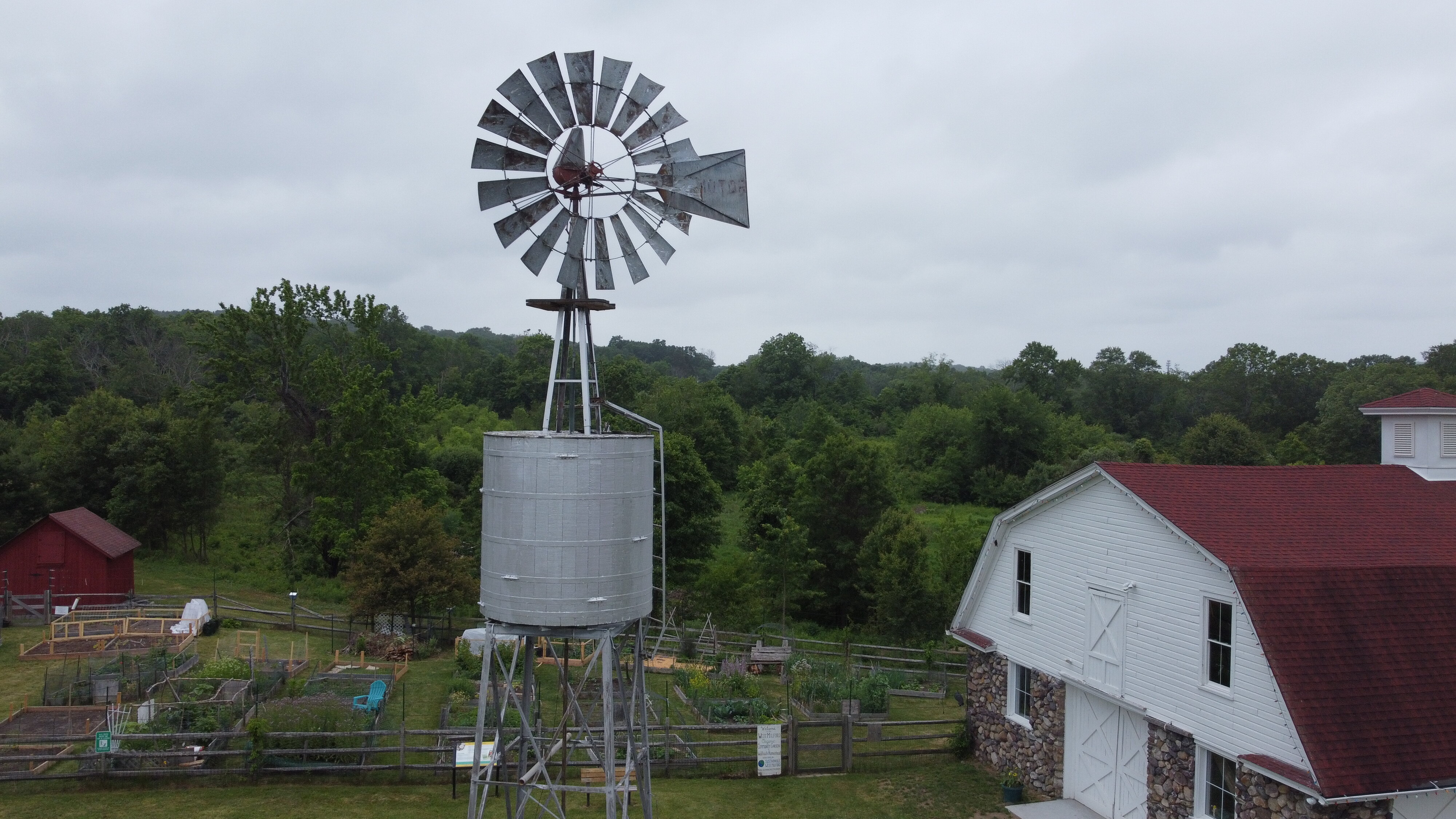
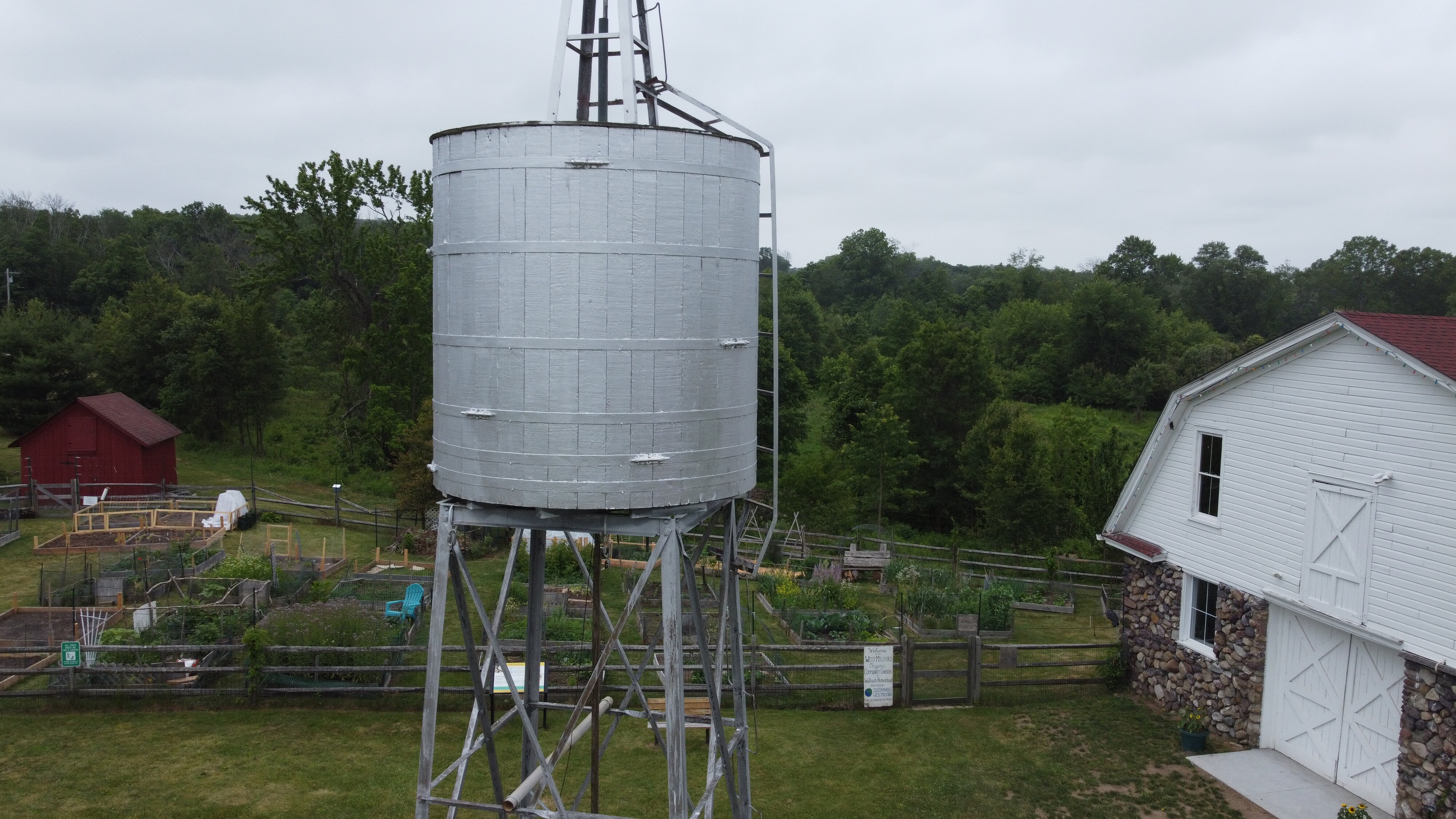
This still supplies water. Inspection tip - Neil D. Tyson on Water Towers: https://www.youtube.com/watch?v=VAn5xYpbVR8&t=136s

-
Ask the plumber. He's right there.
- 1 reply
-
- 1
-

-
I think the venting guidelines might only be the manufacturer's tool to deflect claims. Here's a better application - plenty of venting.
-
looking for a freelance computer person
Bill Kibbel replied to Les's topic in Computers & Reporting Systems Forum
Our head admin here, Mike Brown, is a software developer. -
New NJ law effective summer of 2021. It is now illegal for professional licensing boards to "discriminate" against candidates based on any criminal history or criminal conduct. Apparently, public protection = discrimination.
-
In New Jersey, the very first requirement of an applicant for a home inspector license: "1) Is of good moral character". New Jersey has begun issuing professional licenses to convicted felons. At least one Megan's law registered convicted sex offender is now a NJ licensed home inspector.
-
In my area, it's getting much, much worse. Some of the many new inspector schools seem to provide inexperienced folks just enough to get 'em licensed. The majority perform inspections like zombies, spending most of the time tapping screens and assuming the software does the whole job for them. I've always liked Jim B's writing style.
-
Lucy Van Pelt has been named a person of interest by investigators. Woodstock hasn't been seen since the body was discovered.
-
Not just for '70s backsplashes.
-
Permastone and formstone have become the generic term for the old lickum-stickum veneer. There was a short documentary/commentary produced on the stuff. I think it's called Little Castles. The unique film director John Waters is in it and called it the "polyester of brick".
-
It's not "Insulbrick". Inselbric, Inselstone & Insulsyde are made with an asphalt-coated fiberboard and stone granules imbedded. It looks just like the surface of asphalt shingles. What's pictured looks like an early manufactured stone veneer (fake stone made from concrete with pigments and colored aggregates added). Most common from the late 1940s into the 60s.
-
Wow. WTAF happened that it got this far?
-
It looks very much like what I see occasionally in cedar posts. It's never raised any red flags for me to investigate. I'm pretty sure that what I've seen is dried sap. I don't think it's the cause of the cracks. I think it's normal checking. It just occurs along where the most sap has collected as this is the easiest/weakest place for the crack to form.
-
No, it's comparing heavy apples to lighter apples. The topic here is "Looking for lighter ladder".
-
"What is this?" - Unique. Context?
-
Steve, what you listed are not what my Werner ladders weigh. For example, my 16' is 18 lbs, not 31. Again, my 28' is 38 lbs, not 56. Maybe you're only looking at type 1A aluminum ladders. That load capacity rating is unnecessary for what I do. I scurry up and down ladders a few times a day. If I was over 300 lbs and perpetually carrying 4 bundles of shingles up to the roof, I might need it. Never had a defect that would need warranty coverage. I've replaced ropes and a couple moving parts after a couple decades of use. 4 years ago, I replaced my most used 28' after 31 years only because of its appearance. I still use it around the homestead.